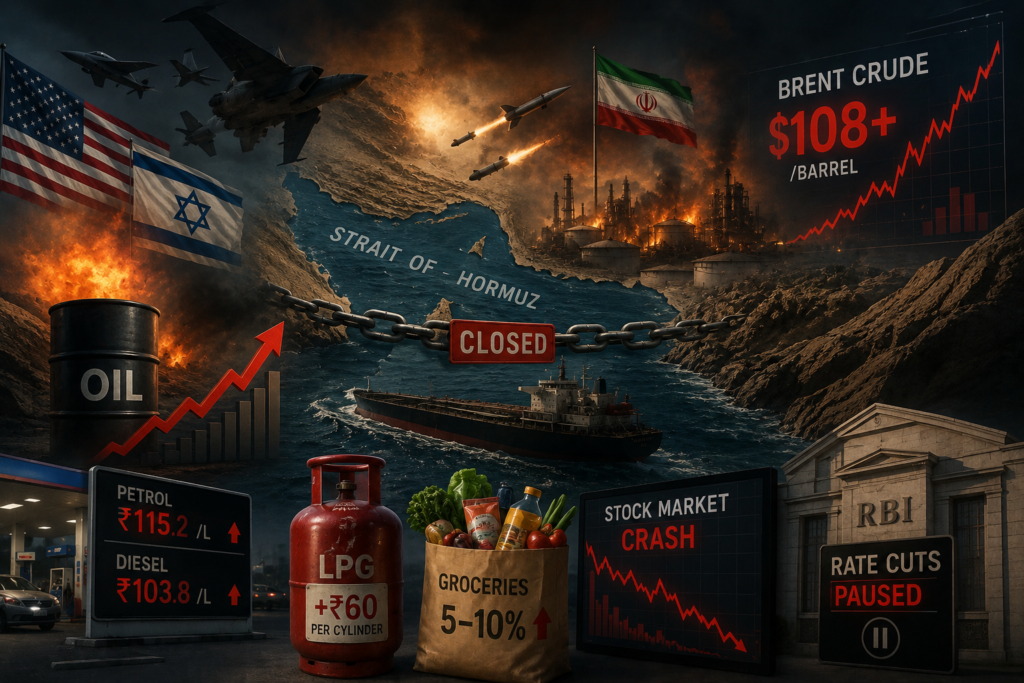
US-Israel Military Operation Against Iran; Strait of Hormuz Closed — Global Energy Crisis Triggered
28 February – 1 March 2026
Source: Wikipedia — Economic Impact of the 2026 Iran War; CNBC; Bloomberg; ICICIdirect Research
On 28 February, US and Israeli forces launched strikes on 47 Iranian military targets. Iran retaliated by closing the Strait of Hormuz, through which 20% of global oil supplies and significant LNG volumes transit. Brent crude surged 10–13% initially to $80–82/barrel, and subsequently spiked to over $108–117/barrel as the conflict escalated. Iran also attacked US military bases in Qatar, UAE, and Bahrain. The IEA described this as the “greatest global energy security challenge in history.” India imports 85% of its crude oil, with approximately 50% transiting through the Strait. India also imports 91% of its LPG from the Gulf. QatarEnergy declared Force Majeure on LNG contracts.
💰 Impact on your wallet: This single event has cascading effects on almost every aspect of your personal finances. Fuel prices: Petrol and diesel would have spiked but the government absorbed part of the shock through excise cuts (see March excise duty cut below). Cooking gas: LPG prices rose by ₹60/cylinder initially. The government diverted refinery capacity to prioritise household LPG production. Food prices: Higher diesel costs raise transport costs, which raise food prices. Expect grocery bills to be 5–10% higher over the next 2–3 months. Your investments: Stock markets crashed (detailed in the Deep Dive section below). Your loan: The RBI paused rate cuts, so EMI relief is on hold.