
Story 1 : The Value of Money Lies in How We Perceive It
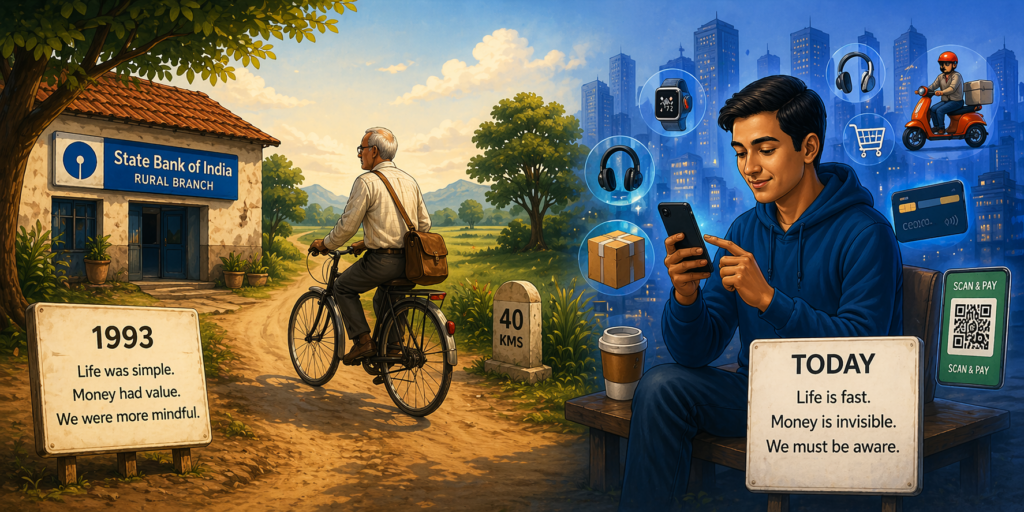
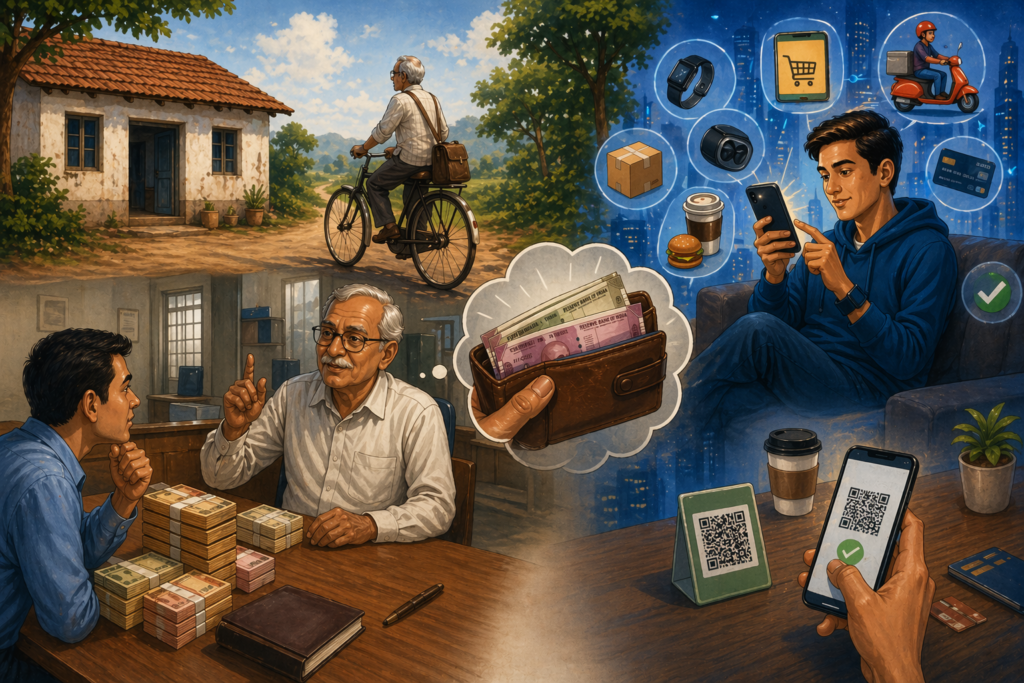
It was the year 1993 and I was working as an officer in State Bank of India in a small rural branch in the state of Andhra Pradesh. Life was pretty simple then. No internet, no mobiles, no social media, no ordering of food at 12 in the night, no big malls, no 24 /7 purchases of goods from the online shopping platforms, and no 10-minute deliveries of everything etc. You wanted to buy something you had to plan for it because stores were open only for a limited time every day and most of them were closed on Sundays, the day you had a holiday.
Those were also the days when cash was king and when borrowing was neither easy nor was it without a stigma attached to it.
In short, Life was uncomplicated.
My manager at the bank, an elderly gentleman, would travel about 40 Km. at the end of every month to another larger branch of the bank, get some new currency notes just so that when we withdrew our monthly salaries, we could get those CRISP, NEW, UNSTAINED currency notes.
When this happened for a few months, I could no longer contain my curiosity as to why the manager was taking so much trouble every month to just get those new currency notes and give them to us. He heard me out and then gave me the reason, which actually became a life lesson for me and countless others to whom I have shared this. He said:
At that moment, it struck me. He was right. Absolutely right.
Now, fast forward to the current times. We live in a world where everything is INSTANT. Everything is almost 24X7. We are surrounded by gadgets, and we want new ones frequently. Cash is rarely used. Borrowing is rampant (you get a loan at the click of a button). The peer pressure to buy is enormous. Consumerism is at its peak.
We live in a society now where we don’t know where the money is coming from and where it’s going (we just swipe a card or scan a QR code or tap a phone and bingo, payment is done),
In this environment, how do we keep track of our FINANCIAL HEALTH?
By being financially literate!
Story 2 : The Cost of Trust in the Digital World
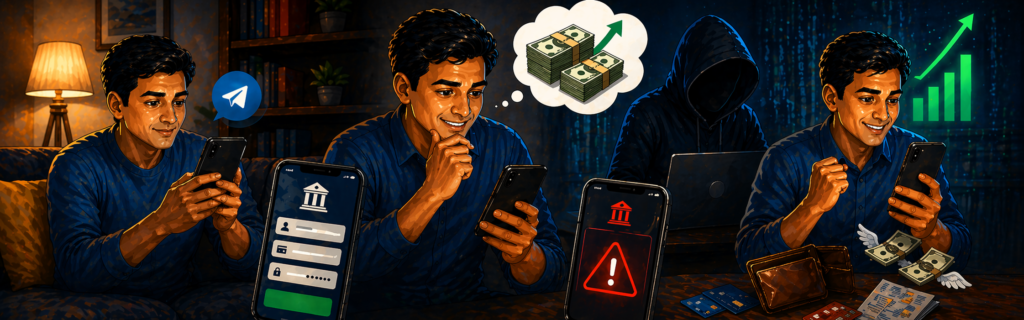
An engineer friend of mine was working for a large company in India. A soft-spoken person, he was known for his financial discipline. He had saved a large sum of money that was lying in his bank account.
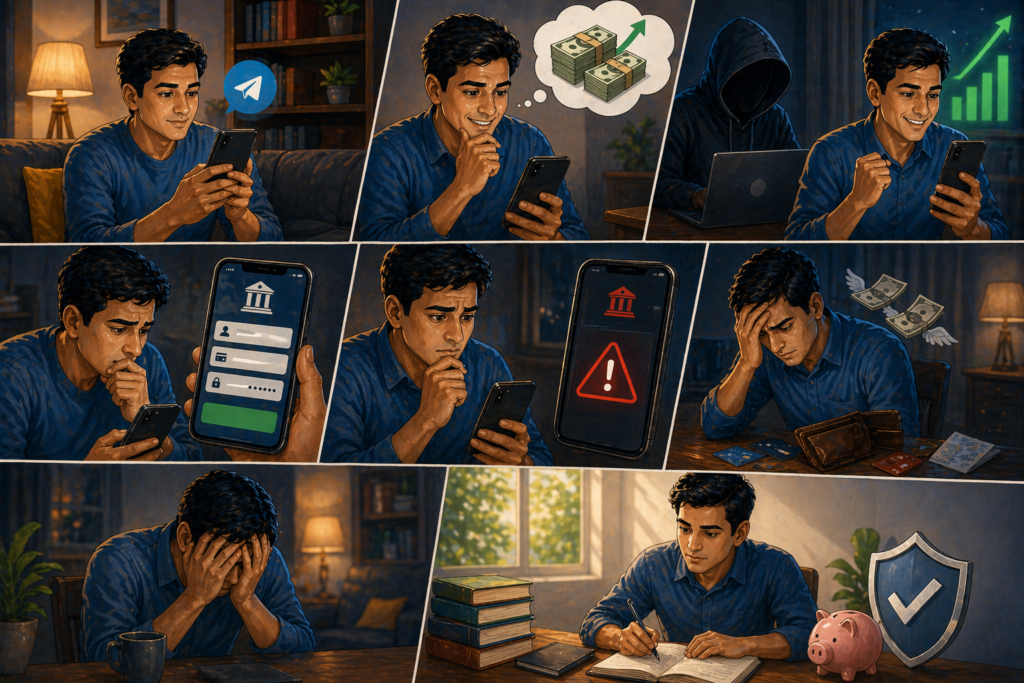
One day he got added to an unknown messaging group in Telegram (like WhatsApp) without his approval. This group had about 15 members and there was a lot of discussion about investments and how someone from the group was helping people grow their money with high returns in a short span of time.
My friend first invested a few lakhs and was made to believe that his money had doubled in a short time. He was happy and tried to withdraw his investment. That’s when the trouble started. He was told that there was a problem in his account and if he invested more money, he can get the total amount back. They also wanted his bank details. He transferred more money and also shared his bank details. And lo, within a few minutes, his bank account was emptied, and he ended up losing his entire life’s savings running into lakhs of rupees.
If you think how can people be so foolish, or if this is a one-off case, think again.
Reserve Bank of India says that in the year 2024-25 alone, people lost more than Rs. 35,000 crore in bank frauds. That’s a huge sum of money.
So, how do we protect ourselves from such frauds and FINANCIAL RUIN?
By being financially literate!
Story 3 : The Hidden Trap of Easy Loans
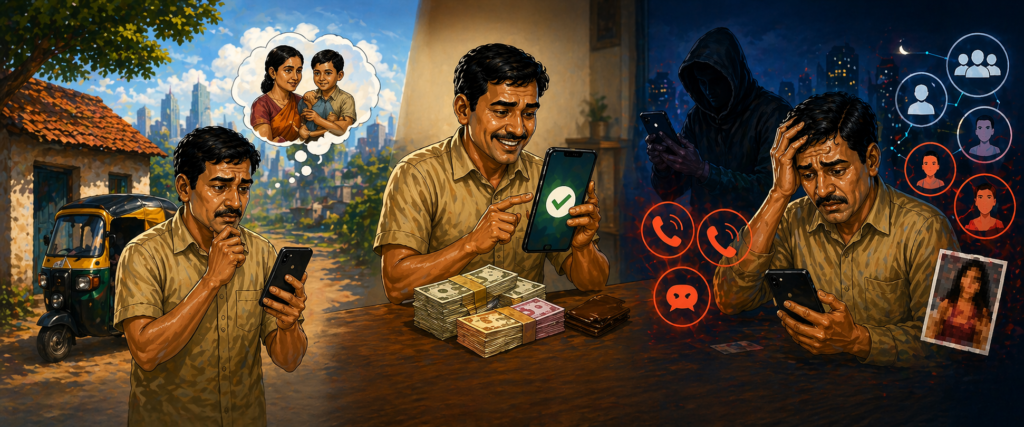
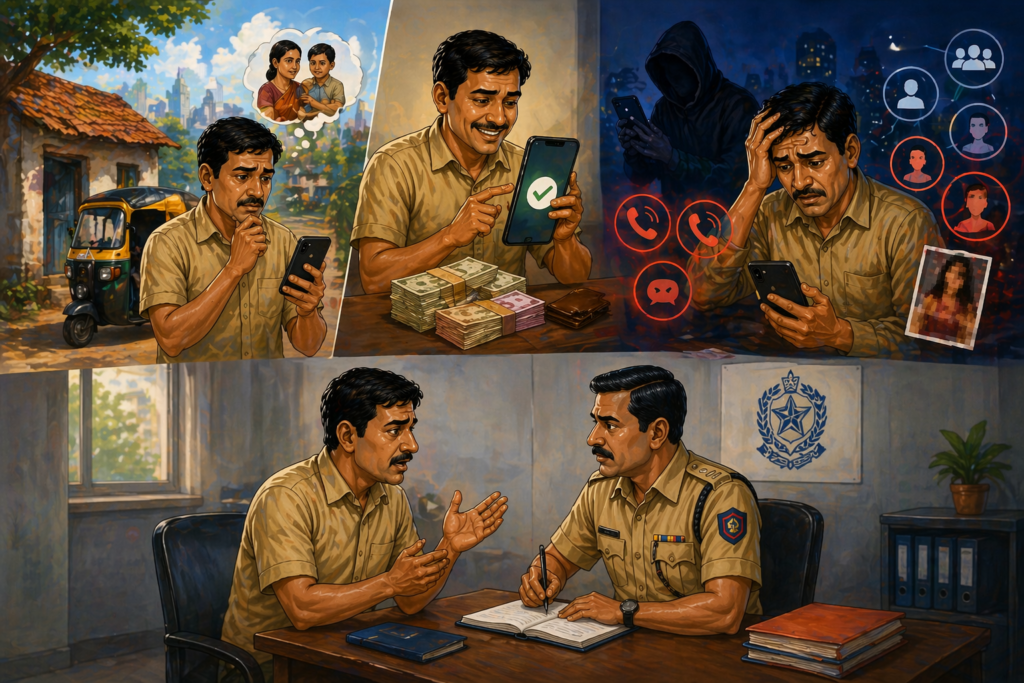
My maid’s husband in Mumbai who drives an auto was looking for a loan to meet some family requirement. Someone told him about lending app where one could get loans instantaneously and without any documentation. He immediately downloaded an App, which neither was from a known lender nor looked trustworthy. The App asked for all kinds of permissions in his phone, and he happily said ‘Yes’ to everything. He didn’t bother to read about the loan’s terms and conditions and ‘agreed’ to everything. He got his money and he was happy.
However, his happiness was short-lived as people from the lender started pressuring him for repayments. He kept paying but the loan never got paid in full because the interest rates were exorbitant. At one point, he realised that he had paid two or three times the amount borrowed but he was still being pressured for more money.
He deleted the App and thought that would be the end of it. But no. The trouble didn’t stop there. The loan collection guys started calling his family members and abused them, called all his contacts (because they had full access to the phone) and defamed him, and finally started blackmailing him by sending morphed pictures.
He was shocked by the turn of events and rushed to the police station to lodge a complaint.
How could he have handled this episode and protected his reputation and his money?
By being financially literate!
Being financially literate helps one to manage money smartly, protect from frauds, to not get trapped by loans and in many other ways.