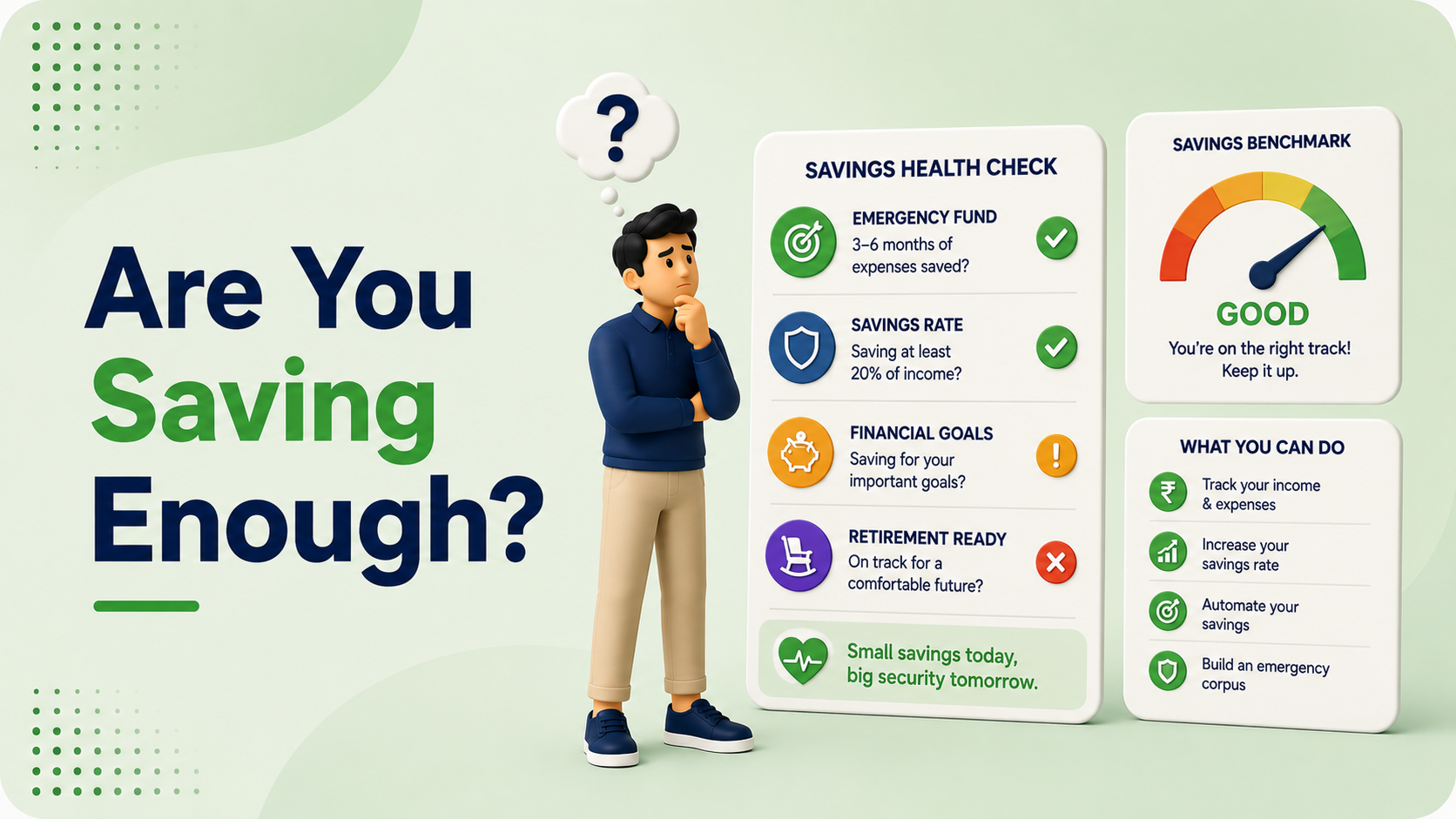
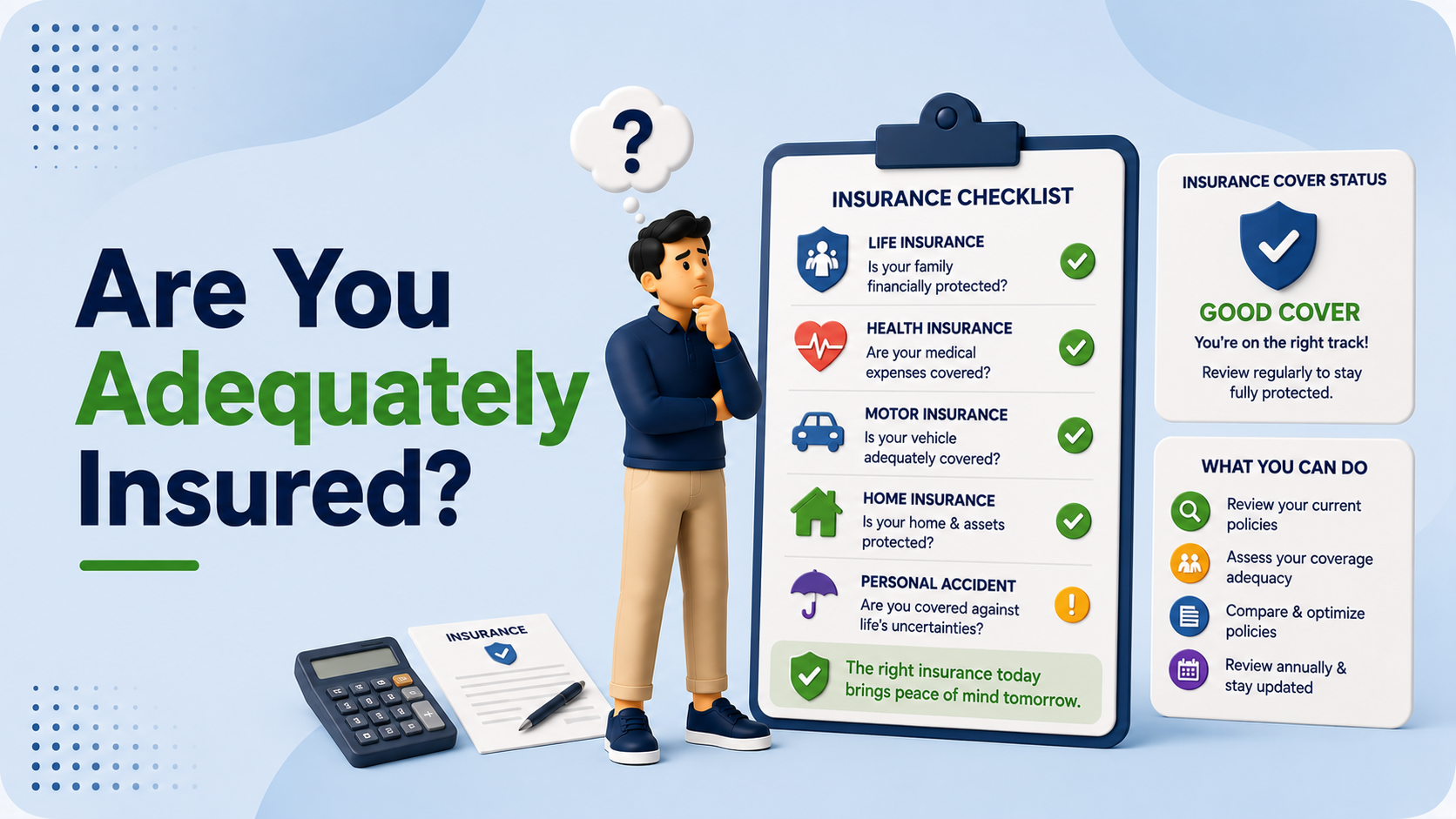
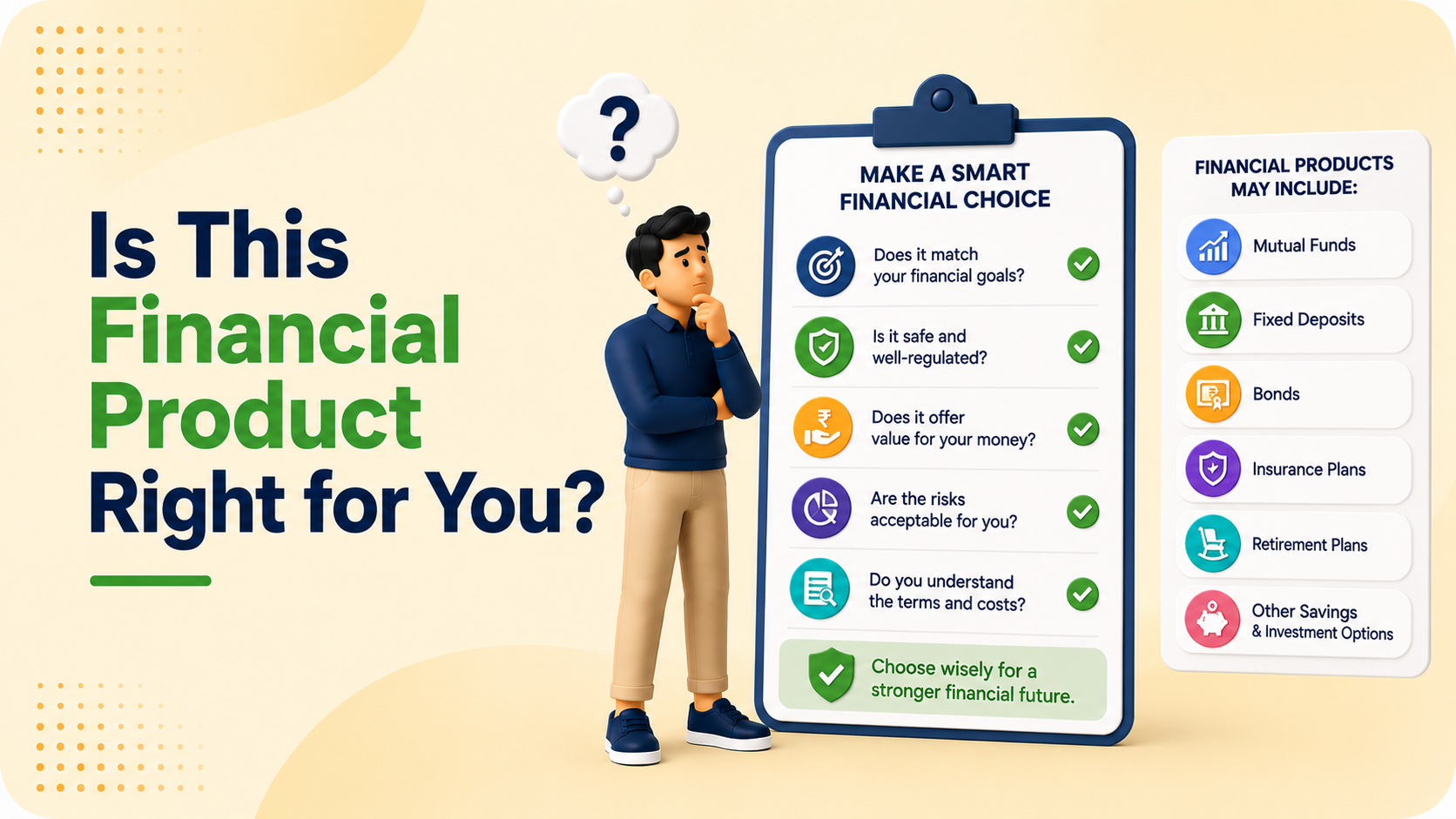
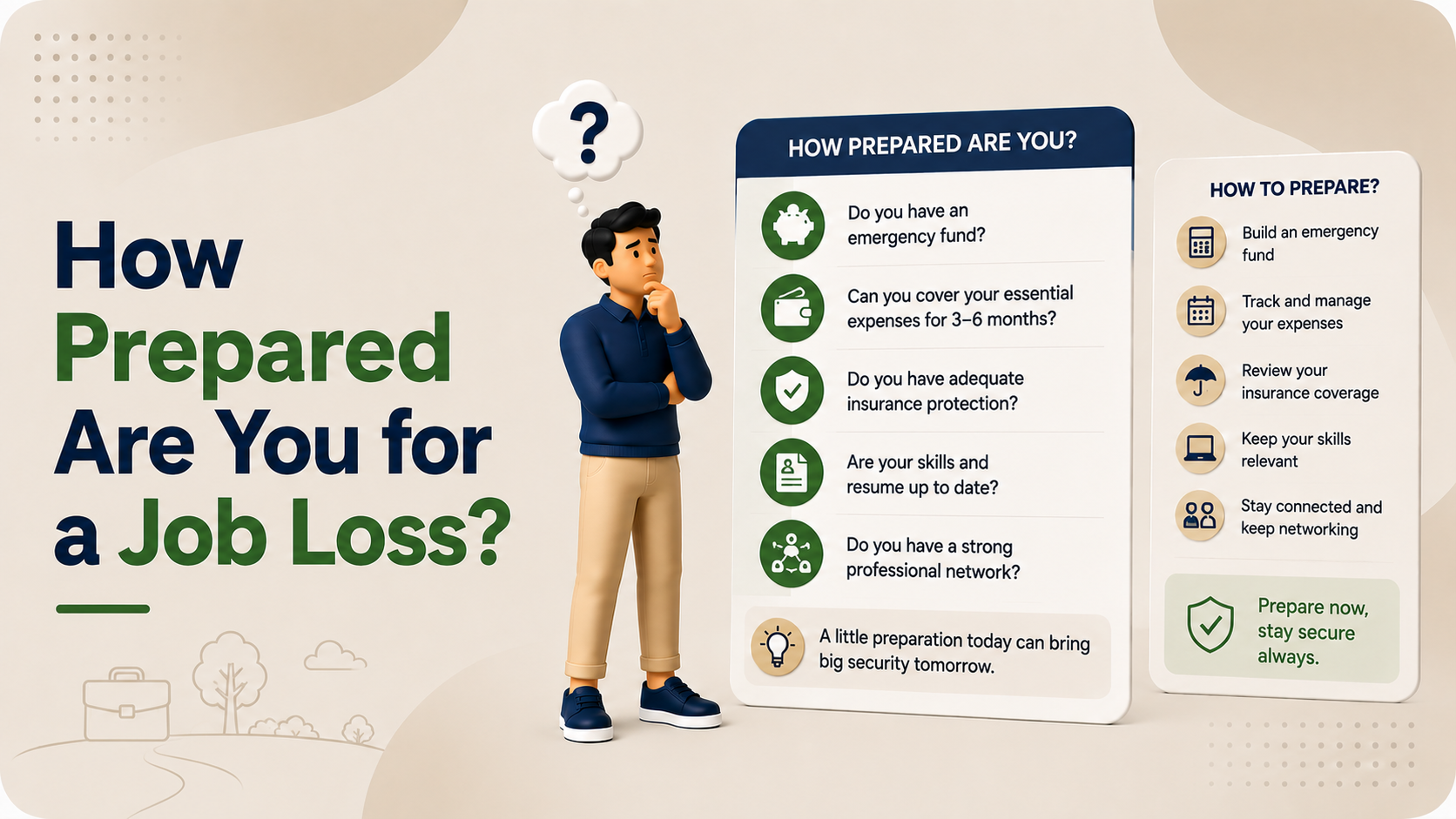
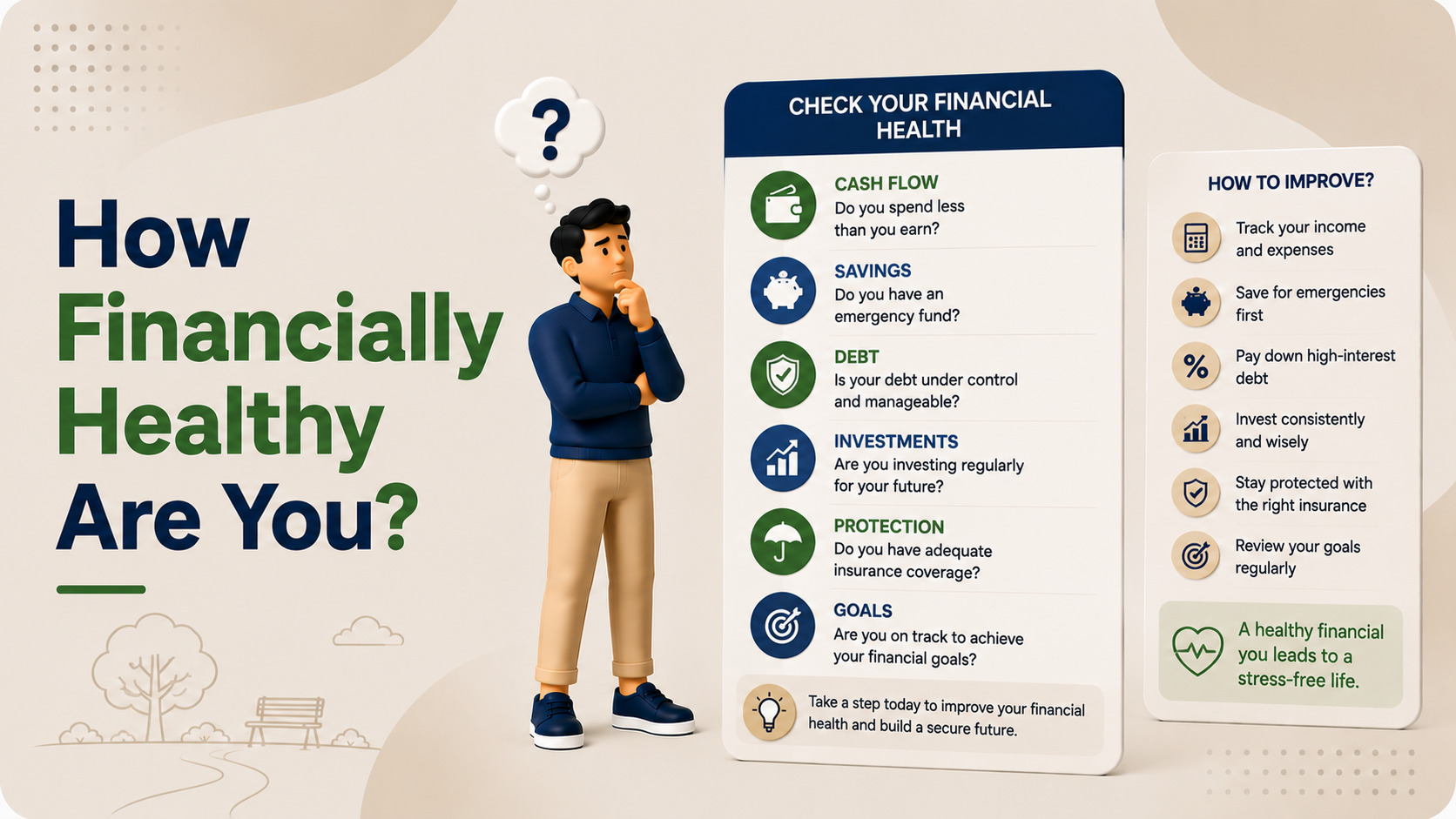
These Questionaries help you to answer the following:
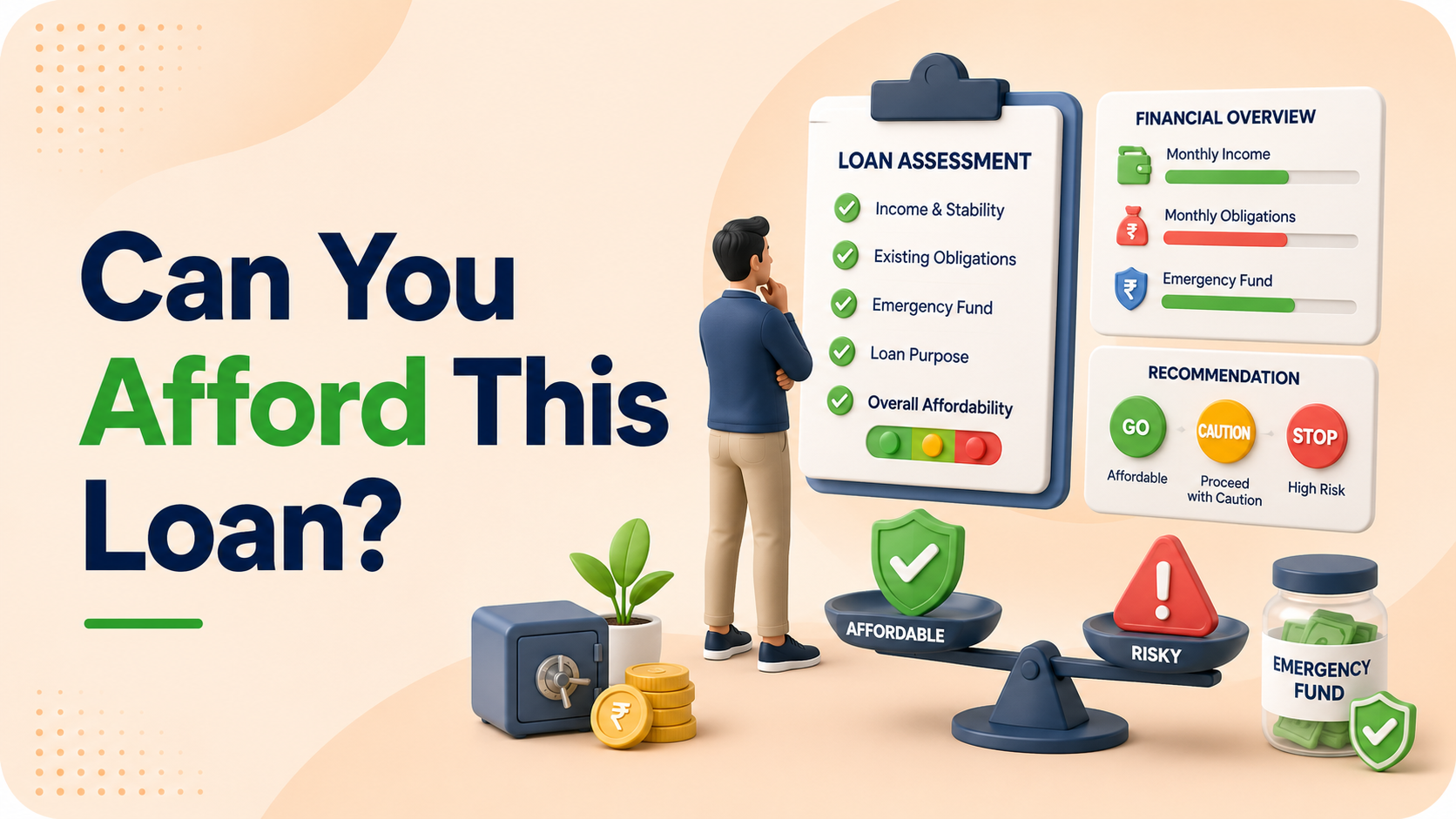
1. Can You Afford This Loan? Before you borrow — any amount, any lender, any purpose. Most loan decisions are made on the basis of whether the EMI feels manageable today. This questionnaire looks at the full picture: your existing debt obligations, your income stability, your emergency buffer, and the loan's true total cost. It tells you not just whether you can service this loan, but whether you should take it on.
2.What's Your Financial Health Score? Start here if you're not sure which of the other six applies to you first. This is the baseline assessment — covering income, expenditure, savings rate, debt load, insurance coverage, and investment behaviour — that gives you an overall read on your financial position and flags which specific areas need attention. Think of it as the annual health check-up equivalent for your finance.
3. Are You Ready to Retire? For anyone within 15 years of their intended retirement date — or anyone who's never actually run the numbers. Retirement readiness is not about having "enough saved." It's about whether your projected corpus, at your expected withdrawal rate, will sustain your expected lifestyle for the length of your retirement. This questionnaire runs that calculation and tells you where the gap is while there's still time to close it.
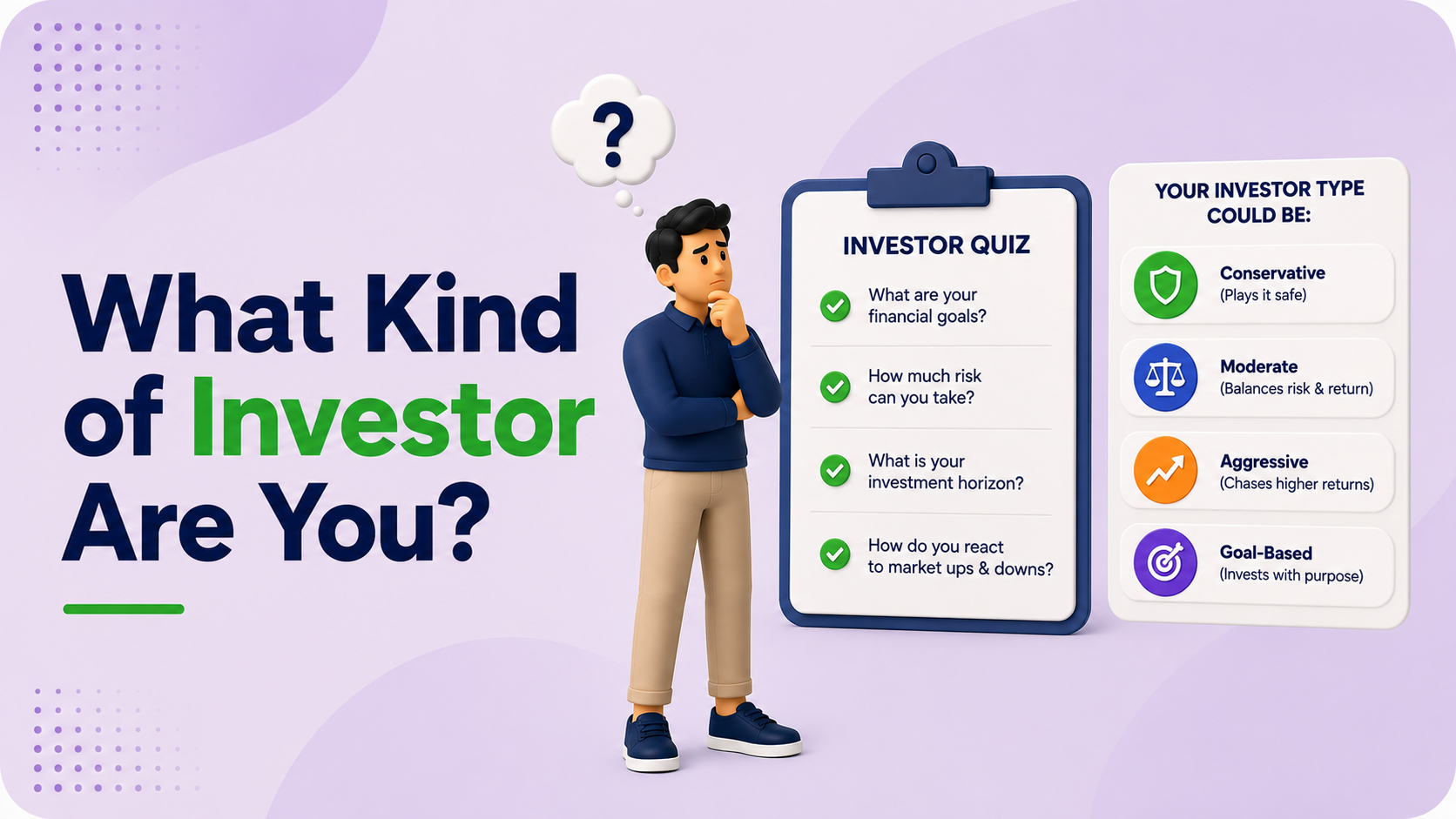
4.What's Your Risk Profile? Before you invest — in anything. Your risk profile determines which asset allocation is actually appropriate for you, as opposed to what a distributor recommends or what performed well last year. This questionnaire goes beyond the standard "conservative / moderate / aggressive" label to assess your capacity to take risk (your financial position), your willingness to take risk (your temperament), and your need to take risk (your return requirement) — three things that are often misaligned, and whose misalignment is the most common source of bad investment decisions.
5. Is Your Insurance Coverage Adequate? For anyone who has insurance but has never verified that what they have actually covers what they think it covers. Most Indians are underinsured on life cover (typically calculated as 10–12x annual income, net of existing assets and liabilities) and underinsured on health cover (given medical inflation running well above general inflation). This questionnaire tells you the gap, specifically, not generically.
6. How Financially Prepared Are You For A Job Loss? For anyone in employment — particularly salaried professionals, where the illusion of income security is often strongest. Job loss preparedness comes down to three variables: the size of your emergency fund relative to your fixed obligations, the liquidity of your assets, and the speed at which you could realistically replace your income. This questionnaire maps all three and tells you how many months you could sustain your current life without a salary — and what that number should be.
7. Is That Investment Product Suitable For You? For anyone who has been offered — or is considering — a specific investment product, whether it's a ULIP, a structured product, a PMS, an AIF, or a mutual fund with an unfamiliar mandate. Suitability is a regulated concept: SEBI requires that investment advice be suitable for the investor's risk profile, time horizon, and financial situation. This questionnaire applies that framework to whatever specific product you're evaluating, so you can make the decision on the basis of fit rather than on the basis of the returns quoted in the pitch.