
ECONOMY

ECONOMY

UPI, Digital Payments, and the Invisible Economy

UPI, Digital Payments, and the Invisible Economy India’s digital payment architecture is processing over 15 billion transactions a month, rapidly evolving from a standard smartphone convenience into the absolute primary financial ledger of the nation. While real GDP scales at 7.6% and the services sector accelerates at 9.2%, UPI is systematically converting the historically unorganized cash economy into a high-velocity, completely visible data stream.  Before you effortlessly complete your next instant scan-to-pay transaction, you need to ask a much harder question: “Is this frictionless digital freedom quietly baiting me into a lifestyle lock-in?” Navigating India’s high-tech digital ecosystem requires managing three powerful structural transformations: An expandingly green digital portfolio means absolutely nothing if your smartphone convenience is quietly eroding your future purchasing power through unmonitored lifestyle creep.  Watch this video to understand the invisible nervous system of the digital economy and learn exactly how to introduce strategic financial friction to keep your cash flow locked into real wealth creation.
ECONOMY

Choose Your Bank Wisely

Choose Your Bank Wisely Selecting a banking partner in India’s modern economy functions exactly like choosing a vehicle from a high-velocity fleet, where your specific destination and financial cargo dictate whether you need an armoured truck, a premium SUV, or a high-speed motorbike. Positioned in 2026’s goldilocks environment of 7.6% real GDP growth and a roaring 9.2% services sector expansion, your choice of a bank account is no longer a passive administrative choice—it is a live investment strategy.  Before you select a generic parking spot for your next monthly salary transfer, you need to ask a much harder question: “Am I leaving my capital in a slow vehicle while the rest of the economy moves at the speed of light?” Aligning your lifestyle needs with institutional realities means tracking three distinct banking models: Stop letting the money illusion lull you into financial stagnation; a single, unmanaged savings account is a risky bet against your own purchasing power.  Watch this video to map out your personal banking profile and learn how to split your liquid assets strategically across separate legal lifeboats to ensure maximum speed and safety.

ECONOMY

Bad Loans @ Banks and Your FD Rates

Bad Loans @ Banks and Your FD Rates To understand the structural plumbing of the banking system, imagine a massive commercial kitchen where your cash deposits are the wholesale raw ingredients and loans are the finished dishes sold to corporate diners. A Non-Performing Asset (NPA) is simply a diner who walks out without paying for a lavish meal, leaving a massive hole in the kitchen’s budget that everyday savers eventually fund. While India’s 2026 economy cruises at a strong 7.6% real GDP growth and gross bank defaults sit at decade-lows, the institutional memory of past banking crises continues to dictate your financial returns.  Before you lock your hard-earned capital into a traditional fixed deposit, you need to ask a much harder question: “Is my bank spending its operational energy chasing unpaid meals instead of feeding my retirement?” Tracking how non-performing corporate loans directly penalize your personal wealth means monitoring three institutional levers: Don’t let institutional bad debt function as a hidden tax on your personal net worth; a fixed deposit should only play a minor support role for baseline stability rather than acting as the lead actor of your wealth strategy.  Watch this video to understand the real structural health of your financial institution and discover how to bypass bad loans to capture the true growth of the nation. 

ECONOMY

Bank Failures and DICGC Coverage

Bank Failures and DICGC Coverage Most consumers view a standard commercial bank as an indestructible vault engineered to safeguard their lifetime savings forever. In reality, a banking institution operates like a ship on a volatile sea—and when severe asset irregularities trigger a crisis, you need to verify the exact capacity of your lifeboat. Before you park your entire liquid net worth inside a single high-yielding account, you need to ask a much harder question: “Is my capital structured safely within institutional weight limits?”  Securing your core savings from structural failure requires mastering the exact parameters of the deposit insurance safety net: Chasing attractive interest yields at unstable institutions without proper diversification exposes your principal to extreme structural risk; safety of purchasing power demands strict navigation.  Watch this video to perform an institutional wealth audit and learn how to partition your deposits across separate legal lifeboats to guarantee 100% protection.

ECONOMY

Bank Mergers and What They Mean for Your Account?

Bank Mergers and What They Mean for Your Account? The sweeping consolidation of public sector banks down into just 12 massive financial institutions represents a structural rewiring of the nation’s financial circulatory system. When a smaller bank is absorbed by an anchor institution, it is far more than a simple cosmetic logo update on your digital dashboard. Before you assume your automated banking transactions will continue uninterrupted, you need to ask a much harder question: “Have I verified the digital coordinates that link my portfolio to the clearing house?”  Navigating an institutional banking migration requires auditing the core digital and contractual plumbing: A major core banking system integration can trigger temporary digital clogs; failing to audit your mandates risks a real financial penalty if an automated payment bounces.  Watch this video to execute a seamless account migration audit and discover how to leverage bank consolidation to negotiate superior credit terms. 

ECONOMY

Economic Impact of Govt. Pay Revisions

Economic Impact of Govt. Pay Revisions When the public sector institutes a massive structural raise, the resulting wealth effect triggers a powerful wave across the entire domestic economy. Coordinated salary adjustments like the 8th Pay Commission pour immediate liquidity into the hands of nearly 50 million state workers and pensioners. Before you dismiss public wage policies as irrelevant to your private business or investments, you need to ask a much harder question: “How do I position my capital to catch the massive consumption super-cycle?”  Capitalizing on government pay overhauls requires tracking the predictable sequence of consumer spending waves: An institutional wage revision operates as a massive stimulus package for the middle class; missing the signal means ignoring the primary driver of near-term market demand.  Watch this video to build your 2026 consumption investment playbook and learn how to align your business offerings with the surging public sector market.

ECONOMY

Salary Growth vs. Inflation

Salary Growth vs. Inflation Securing a nominal 8% or 10% annual raise on your corporate appraisal letter feels like a definitive milestone of professional advancement. However, if the underlying cost of your survival climbs by 6% in that same timeframe, your real wealth accumulation is drastically smaller than it appears. Before you celebrate your next corporate raise, you need to ask a much harder question: “Am I actually expanding my real global purchasing power, or am I just running in place?”  Calculating your true financial trajectory requires indexing your compensation to real-world living costs: Failing to aggressively resist lifestyle creep as your income ticks upward ensures you remain trapped on an economic treadmill regardless of your salary scale.  Watch this video to run a precise real-terms audit on your appraisal and discover how to transition into high-alpha skills that comfortably outpace inflation. 

ECONOMY

Macro Signals – How to Predict a Job Market Storm

Macro Signals – How to Predict a Job Market Storm Corporate layoffs, startup winters, and institutional hiring freezes rarely materialize out of nowhere on a random Monday morning. They are the ultimate lagging indicators of a prolonged macroeconomic domino effect that leaves a long trail of warning signs months in advance. Before you assume your current corporate role is completely secure, you need to ask a much harder question: “Am I actively reading the leading macro signals that dictate my department’s hiring budget?”  Predicting an upcoming professional storm requires monitoring the core operational pulses of the business world: Failing to track the cost of capital means leaving your career entirely exposed to macro shocks; economics is the signal, and your salary is the echo.  Watch this video to build your personalized Job Security Scorecard and learn how to insulate your emergency fund before a sector freeze hits.

ECONOMY

 Safety Net for Gig Workers

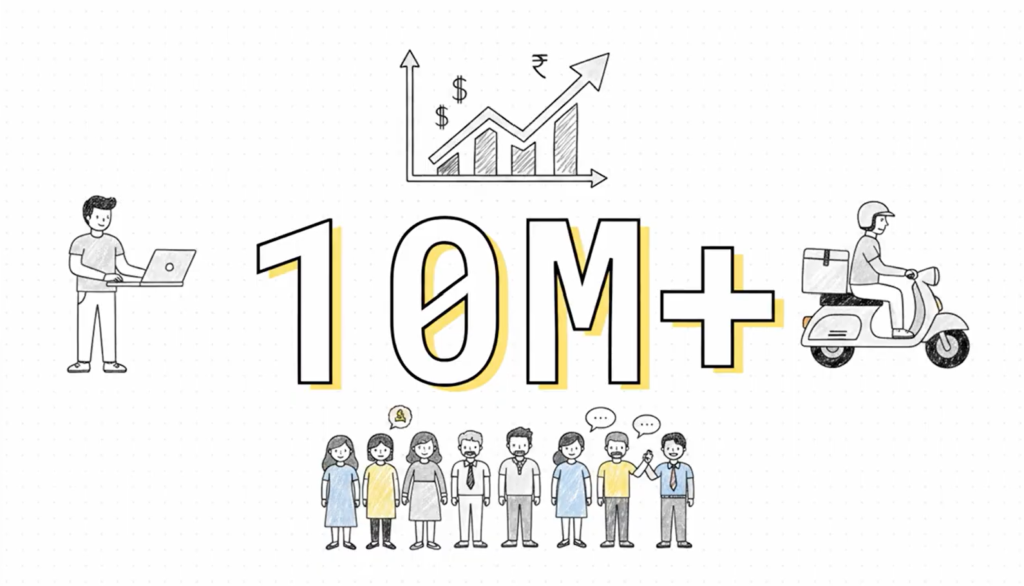
 Safety Net for Gig Workers The traditional corporate structure is no longer the absolute default, as India’s booming gig economy has rapidly surged past 10 million independent professionals. While operating without a boss grants unparalleled freedom, it forces you to become your own corporate HR, finance department, and insurance manager. Before you celebrate the flexibility of independent consulting or freelance development, you need to ask a much harder question: “Can my personal cash flow withstand a sudden shift in platform algorithms or client cycles?”  Constructing a corporate-grade safety net as an independent worker means mastering three critical financial pillars: Operating without automated structural guardrails demands extreme financial discipline; a self-built net is your only shield against sudden market crises.  Watch this video to deploy a flawless advance tax framework and discover how to engineer your credit profile without a standard salary slip. 

ECONOMY

Formal vs. Informal Employment

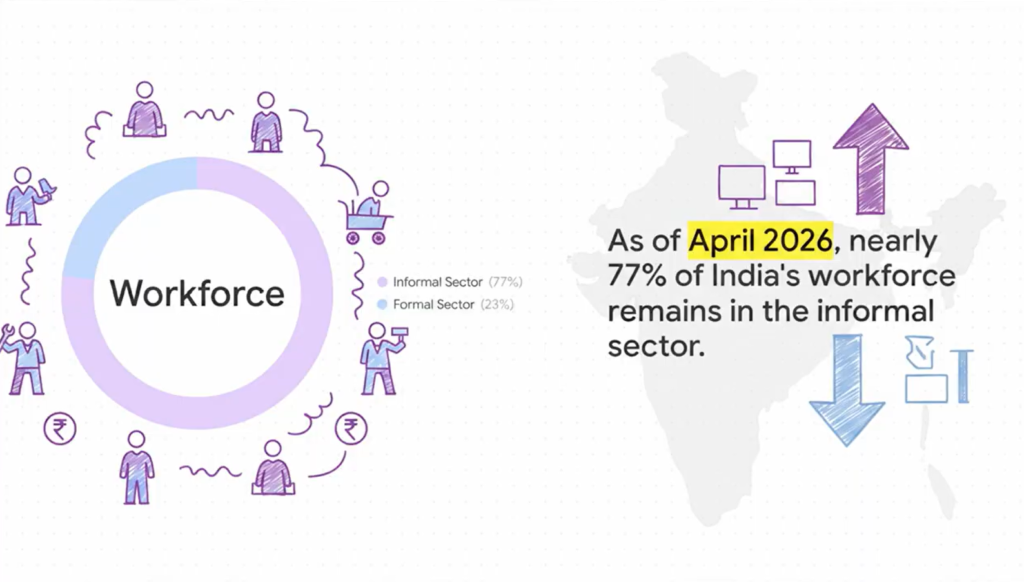
Formal vs. Informal Employment India’s employment landscape remains strictly divided into two completely different worlds: one secured by institutional safety nets, and another operating as a high-wire survival act. Despite rapid digital transformation, a staggering 77% of the domestic workforce remains locked inside the volatile informal sector. Before you accept a higher-paying contract role over a standard payroll offer, you need to ask a much harder question: “Am I mathematically accounting for the true value of an institutional safety net?”  Protecting your financial independence across your career requires evaluating the hidden parameters of employment structures: Formal employment is an elite financial privilege in India; if you operate outside of it, you must build your own defence network immediately.  Watch this video to master the DIY safety net playbook and learn how to utilize upcoming labour codes to protect your independent career.

Book an Appointment Form