
ECONOMY

ECONOMY

Growth Sectors and Your Career

Growth Sectors and Your Career Choosing a professional path based strictly on your college major or what your neighbour does completely ignores how macroeconomics dictates your net worth. In India’s 2026 economic landscape, the national engine is not a single uniform block; it is a collection of sectoral gears spinning at vastly different speeds.  Before you head into your next annual appraisal expecting a massive raise, you need to ask a much harder question: “Am I standing in an economic room with enough structural velocity to actually fund my ambition?”  Latching your professional future onto the fastest-spinning gear requires analysing where the country is actively allocating its capital: Your degree functions merely as a key, but the sector you choose operates as the car; a flawless key won’t get you far if you are driving a slow, low-growth vehicle.  Watch this video to calculate your personalized Career Alpha and learn exactly how to pivot your existing skills into India’s fastest-spinning economic rooms. 

ECONOMY

Nominal vs. Real GDP: The Invisible Treadmill

Nominal vs. Real GDP: The Invisible Treadmill Corporate statements and economic reviews love to champion record-breaking nominal milestones to paint a picture of soaring corporate prosperity. In the real world, celebrating unadjusted nominal metrics is like mapping out a cross-country journey while completely ignoring the mountains in your way.  Before you celebrate a massive 10% corporate compensation raise, you need to ask a much harder question: “What is the underlying economic deflator telling me about my real wealth?”  Shattering the money illusion requires mastering the distinction between superficial numbers and true physical value: An expanding bank balance means absolutely nothing if the real-world purchasing power of those numbers is steadily decaying on the treadmill of inflation.  Watch this video to unpack the current 2026 economic deflator data and learn how to structure your assets for true, inflation-adjusted wealth creation.

ECONOMY

Inflation-Indexed Bonds & The SGB Tax Hammer

Inflation-Indexed Bonds & The SGB Tax Hammer If cultivating an inflation-adjusted mindset is your defensive blueprint, then utilizing indexed financial machinery is your active shield. While traditional fixed-income avenues lock you into rigid terms that fail when prices spike, indexed structures are engineered to scale your wealth automatically alongside the real cost of living.  Before you hunt for secondary market Sovereign Gold Bonds to protect your portfolio, you need to ask a much harder question: “Am I tracking the brutal regulatory tax changes rolled out in Budget 2026?”  Navigating the shifting landscape of inflation-hedged assets requires analyzing three critical structural pivots: Paying a steep, unverified premium for secondary gold bonds under outdated assumptions will saddle you with a highly illiquid, taxable asset.  Watch this video to decode the new rules of gold asset allocation in 2026 and discover how to transition seamlessly into highly liquid, modern alternatives.

ECONOMY

 Inflation-Indexed Thinking

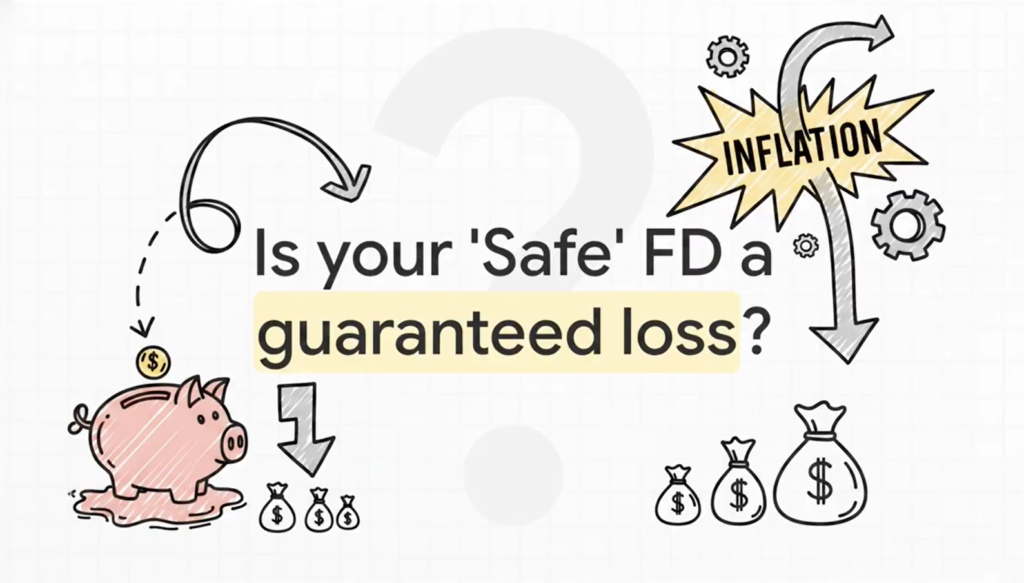
 Inflation-Indexed Thinking: Stop Getting Poorer Watching your bank balance tick upward from 10 Lakh to 11 Lakh creates a powerful wave of professional satisfaction. In reality, this is a dangerous psychological trap known as the “Money Illusion”—if the real-world goods you desire grew by 15% in that same timeframe, you actually got poorer.  Before you celebrate a nominal corporate raise or a fixed interest return, you need to ask a much harder question: “Did my real post-tax purchasing power expand, or did I just take a hidden pay cut?”  Adopting an inflation-indexed mindset means looking strictly past the sticker price of your wealth by monitoring three invisible drains: Chasing superficial percentages instead of real purchasing power ensures your savings slowly decay over time; if your post-tax returns fail to clear your personal inflation baseline, you are simply treading water.  Watch this video to perform a comprehensive “Real-Terms Audit” on your portfolio and discover how to align your wealth with genuine pricing power. 

ECONOMY

Rent Inflation vs. Property Price Inflation: The Divergence

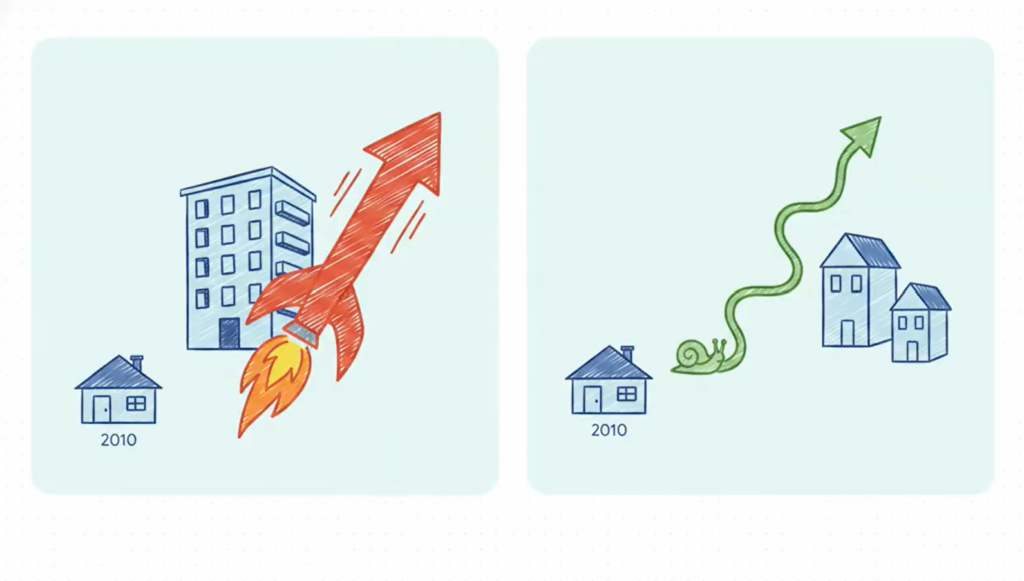
Rent Inflation vs. Property Price Inflation: The Divergence The traditional neighbourhood narrative tells us that buying a home is always superior to renting because property values and rental rates scale in perfect harmony. In the Indian metro landscape, this logic has been fundamentally broken for two decades, creating a massive gap in real estate dynamics.  Before you sign a sale deed and lock yourself into a massive 20-year home loan obligation, you need to ask a much harder question: “Am I buying an actual wealth-generating asset or a low-yield bond with high maintenance costs?”  Taking the raw emotion out of the rent-versus-buy dilemma means evaluating three structural mismatches: Don’t let a temporary, post-return-to-office corporate rent spike scare you into lifetime debt; unless a property yields genuine capital efficiency, keeping the rent agreement active and the equity SIP running is mathematically superior.  Watch this video to deploy the Price-to-Rent metric and master the exact criteria for navigating metro real estate in 2026. 

ECONOMY

Education Inflation: The Cost of Credentialing

Education Inflation: The Cost of Credentialing In India, a top-tier education has always been viewed as the ultimate inheritance you can pass down to the next generation. However, in 2026, that inheritance carries a compounding price tag that is aggressively outstripping standard salary increments and general market inflation combined.  Before you start setting aside arbitrary monthly savings for your child’s future degree, you need to ask a much harder question: “Am I accounting for a cost baseline that doubles every seven years?”  Insulating your educational goals from compounding fees requires recognizing three core structural realities: Failing to plan for the 30% hidden overheads of entrance coaching, student housing, and maintenance gaps early on will trap you into a severe monthly savings deficit later in life.  Watch this video to leverage goal-based equity portfolios and deploy the exact timeline strategies needed to conquer education inflation.

ECONOMY

Medical Inflation: The Ultimate Wealth Threat

Medical Inflation: The Ultimate Wealth Threat While you track modest single-digit consumer inflation to plan your weekly grocery runs, a far more dangerous threat is compounding silently in the background. Healthcare costs in India are skyrocketing at a brutal 12% to 15% annually—nearly four times faster than the general cost of living.  Before you look at your basic 5 Lakh health policy and assume your family is secure, you need to ask a much harder question: “Can my current coverage survive the compounding future shock of healthcare technology?”  Future-proofing your life savings requires understanding the hidden forces driving healthcare costs out of reach: Treating medical planning with passive indifference is a direct path to retirement bankruptcy; a single complex surgery a decade from now can completely erase a standard lifetime nest egg.  Watch this video to master the “Super Top-Up” insurance strategy and learn how to capitalize on the 2026 GST cuts to shield your wealth from medical inflation. 

ECONOMY

Food Inflation: The Mandi vs. Your Money

Food Inflation: The Mandi vs. Your Money In developed global economies, agricultural costs are just a predictable baseline expense on a household sheet. In India, food pricing is a volatile political fuse that can instantly crash consumer sentiment and force the central bank to rewrite its entire playbook.  Before you panic-buy or stress over the next massive spike in grocery bills, you need to ask a much harder question: “Is this market disruption a temporary supply shock or a permanent structural threat?”  Navigating the volatile agricultural cycle means tracking three critical bottlenecks in the farm-to-fork journey: When the local Mandi goes on fire, major financial policy shifts follow fast; keeping an eye on agricultural storage and seasonal trends is vital to protecting your liquid cash flow.  Watch this video to understand the seasonal rhythms of food inflation and discover how to insulate your household budget from sudden supply chain shocks. 

ECONOMY

Personal Inflation

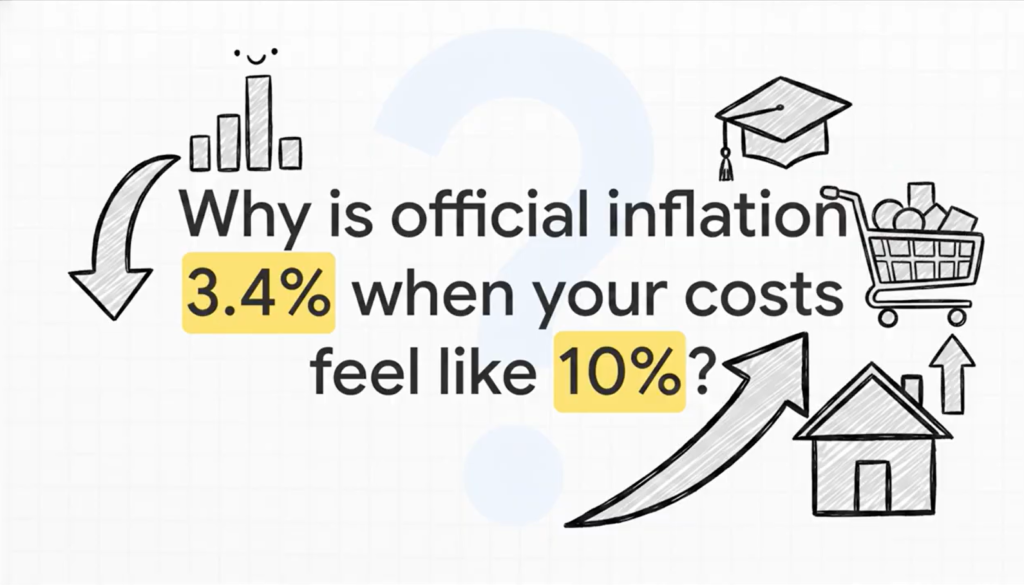
 Personal Inflation: Escaping the “Average Trap” When official data shows consumer price indexes sitting comfortably at 3.4%, but your actual monthly outlays have surged by a painful 10%, you aren’t imagining things. The national CPI is a broad-brush tool designed to measure the basic survival baseline of 1.4 billion people, heavily skewing it away from a modern lifestyle.  Before you blindly trust standard online retirement calculators to plan your long-term independence, you need to ask a much harder question: “What is my true Personal Inflation Rate?”  Escaping the statistical average trap requires auditing three brutal lifestyle premiums that national metrics ignore: Relying on generic national inflation data will leave your emergency funds and retirement corpus dangerously underfunded over time; you manage a personal economy, not a national average.  Watch this video to calculate your exact Personal Inflation Rate and learn how to construct an investment strategy that outpaces your real-world cost of living. 

ECONOMY

Open Market Operations

Open Market Operations Many investors treat debt mutual funds as completely safe, fixed-return havens, only to face a sudden shock when their portfolio’s NAV drops unexpectedly. The hidden driver behind these sudden market movements is often Open Market Operations (OMOs)—the RBI’s absolute favourite tool for controlling countrywide cash flow.  To protect your debt portfolio from unexpected hits, you must understand how the central bank adjusts the volume of the bond market.  The RBI’s open market bond trading alters your investment returns through three distinct mechanics: Open Market Operations are the RBI’s volume control; failing to match your debt fund’s duration to your actual investment horizon transforms a safe asset into an unmanaged interest rate bet.  Watch this video to decode how the RBI’s current OMO strategy impacts bond yields in 2026, and learn exactly which debt funds fit your financial timeline. 

Book an Appointment Form