Retirement Planning

Retirement Planning

Retirement 2026: The ₹8 Lakh Rule, SUR, and the NPS 80:20 Rule

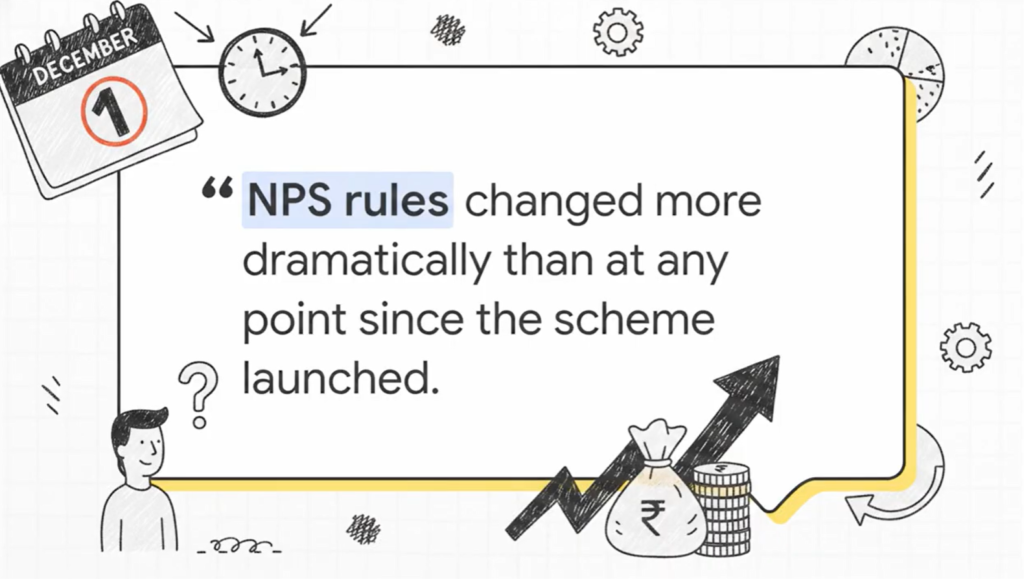
Retirement 2026: The ₹8 Lakh Rule, SUR, and the NPS 80:20 Rule December 2025 brought the biggest change to NPS withdrawal rules since the scheme’s launch. This guide explains the new PFRDA framework in three parts: the “₹8 Lakh Rule” (corpuses up to ₹8 lakh can be withdrawn 100% as lump sum, no annuity required), “SUR” or Systematic Withdrawal (for the ₹8–12 lakh band, ₹6 lakh can be taken immediately with the rest drawn down over a minimum 6 years or annuitised), and the new “80:20 Rule” (corpuses above ₹12 lakh now require only 20% mandatory annuitisation, up to 80% as lump sum — versus the earlier 60:40 split). We also cover the removed 5-year lock-in, the extended deferral age of 85, and flag the one open question: tax treatment of the additional 20% lump sum above the previously-exempt 60% is still awaited from tax authorities.
Retirement Planning

Annuities and Self-Managed Drawdowns

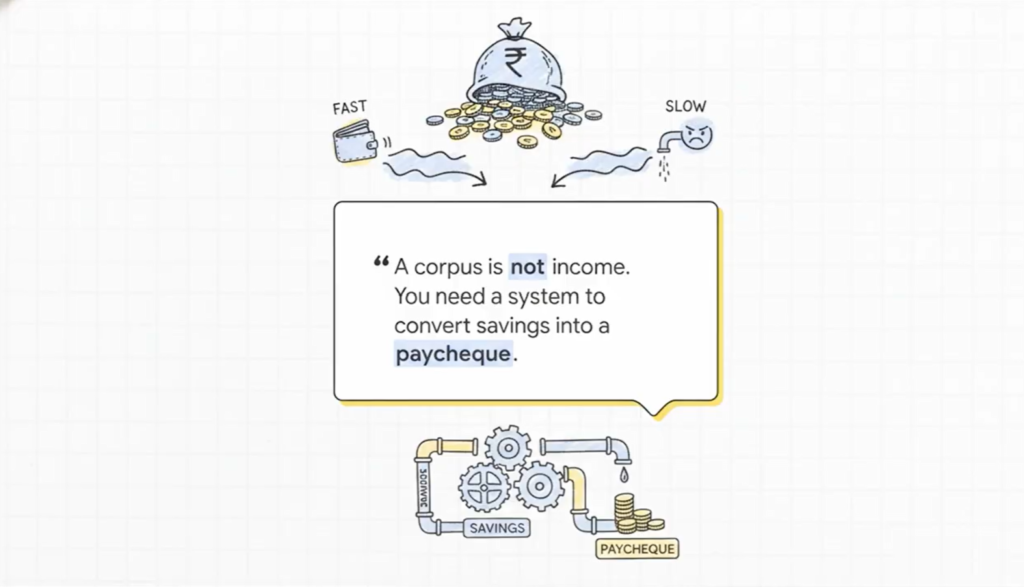
Annuities and Self-Managed Drawdowns Once you stop earning, your corpus needs to become an income stream — and you have two core options. Annuities (the “Annuity Alphabet” — Life, ROP, Joint Life, Annuity Certain, Increasing, Deferred) hand your money to an insurer in exchange for guaranteed payments for life, offering longevity protection but typically modest, taxable returns of 6–7%. Systematic Withdrawal Plans (SWPs) keep your corpus invested and let you withdraw periodically — offering flexibility and significant tax efficiency since only gains are taxed, but carrying market risk. This guide recommends a hybrid “floor + upside” approach: cover essential expenses with guaranteed income, and use SWP for the rest — and previews how the new 2025 NPS rules change the annuity equation entirely.

Retirement Planning

Building a Retirement Portfolio Using Mutual Funds

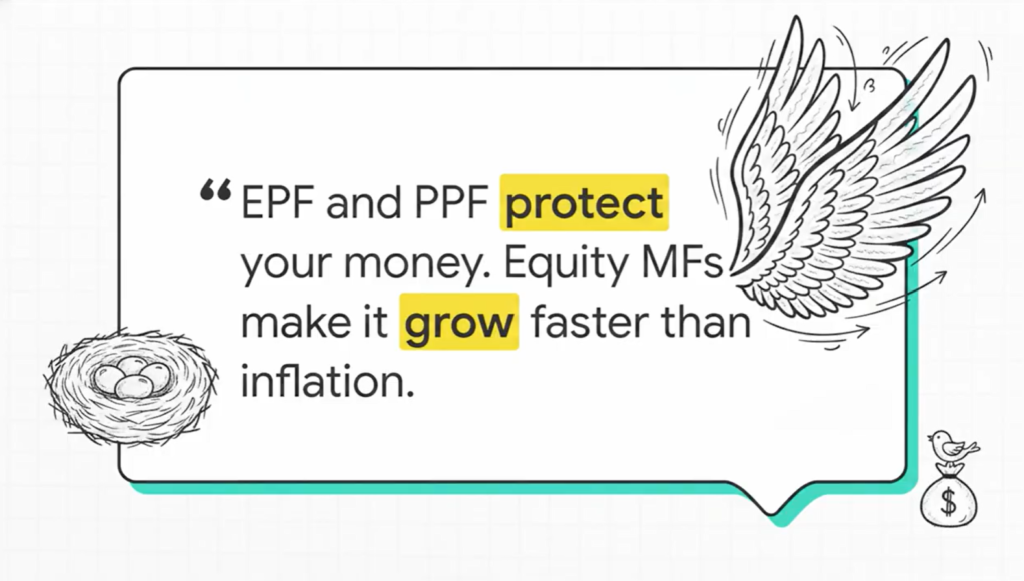
Building a Retirement Portfolio Using Mutual Funds Equity mutual funds are the engine that helps a retirement corpus outpace 6–7% inflation over 20–30 years — something pure debt instruments like EPF and PPF cannot do alone. This guide covers practical fund selection (index funds as a core, flexicap as a satellite, hybrid funds and debt funds as retirement nears), the “100 minus age” glide path for shifting from equity to debt as you age, the power of step-up SIPs, and the 3-bucket strategy that protects retirees from being forced to sell equity during a market crash. It closes with the current tax rules on equity (12.5% LTCG above ₹1.25 lakh/year) and debt fund gains, and how retirees can use the annual exemption to their advantage.

Retirement Planning

The Nest Building Tools

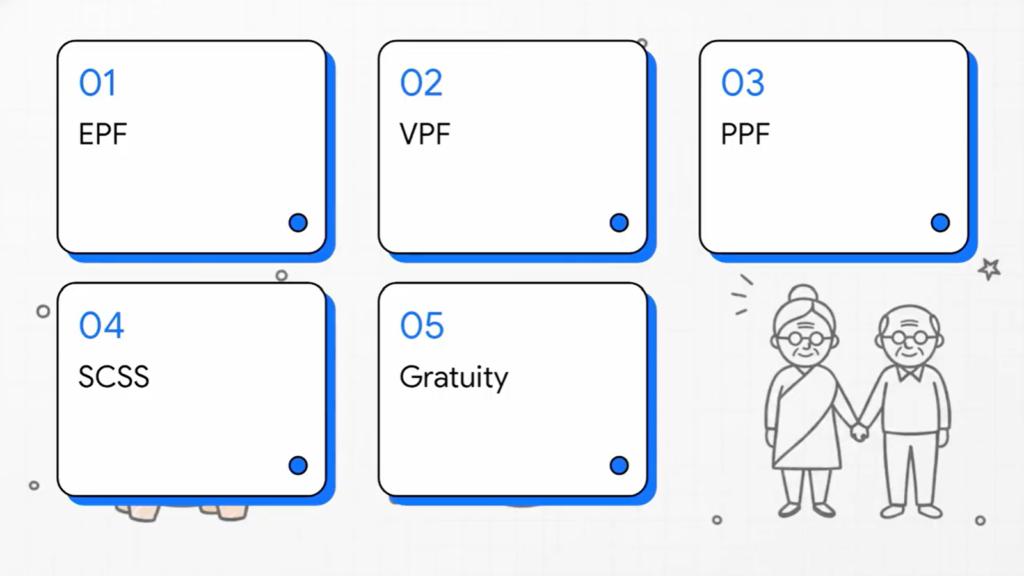
The Nest Building Tools: EPF, VPF, PPF, SCSS & Gratuity EPF, VPF, PPF, SCSS, and Gratuity form the guaranteed, government-backed foundation of an Indian retirement plan — the “nest.” This guide explains what each instrument does, current rates (EPF & VPF at 8.25%, PPF at 7.1%, SCSS at 8.2% for FY 2025-26/Q1 FY 2026-27), contribution limits, and tax treatment (most are EEE — exempt-exempt-exempt). VPF, often overlooked, lets high-earners voluntarily top up their EPF at the same guaranteed rate. SCSS and Gratuity are end-of-career payout tools rather than accumulation tools. Together these five instruments form a low-risk floor — but they don’t offer the equity growth needed to truly outpace inflation, which is where mutual funds and NPS come in.

Book an Appointment Form