Author name: sreegesh@insightdrive.xyz

ECONOMY

Demographic Dividend: Boon or Bane?

Demographic Dividend: Boon or Bane? With over 65% of its population positioned under the age of 35, India operates a massive economic solar array capable of fuelling unparalleled consumption growth. However, this demographic dividend is on a strict biological clock, and unless the workforce secures a rapid skills update, it risks converting into a heavy structural burden.  Before you let a booming national youth narrative dictate your long-term career comfort, you need to ask a much harder question: “Am I building the specialized skill charge required to survive a hyper-competitive job market?” Capitalizing on India’s generational shifting window requires evaluating three critical demographic forces: Relying on generic degrees or routine skills in an automated corporate environment destroys options, trapping your career path below the survival baseline of national growth.  Watch this video to capture direct equity alpha from India’s structural consumption engine and learn how to insulate your long-term wealth timeline before the dividend clock expires. 
ECONOMY

Economic Impact of Water Scarcity

Economic Impact of Water Scarcity Water can no longer be evaluated as a free environmental gift; it operates as a primary macroeconomic input whose depletion levies a severe, compounding dehydration tax across the financial system. As urban groundwater levels collapse, a stark divergence is emerging between water-secure locations and real estate properties that function as dry assets.  Before you execute a property transaction based entirely on premium location branding, you need to ask a much harder question: “Am I buying into a real estate corridor that is running a high risk of systemic dehydration?” Protecting your capital from the silent erosion of water scarcity requires tracking three systemic risk pipelines: Ignoring localized environmental security ratings destroys your options, transforming an apparently safe physical asset into a highly illiquid, expensive liability.  Watch this video to check your city’s structural groundwater risk maps and learn how to identify high-alpha resilience stocks in water treatment ecosystems. 

ECONOMY

 Energy Transition & Your Electricity Bill

 Energy Transition & Your Electricity Bill The Indian economy is in the middle of a massive structural fuel swap, re-wiring its foundational grid away from traditional fossil fuels toward a renewable ecosystem. This transition is a highly disruptive financial event that alters the levelized cost of energy (LCOE) and imposes direct clean-up fees onto your household budget.  Before you passively absorb rising commercial energy costs, you need to ask a much harder question: “Am I positioning my portfolio to capture green transition alpha or am I anchored to a stranded legacy asset?” Navigating the nationwide grid re-wiring requires adjusting your finances across three core transition channels: Allowing your investments to remain tied to high-carbon legacy utilities destroys options, converting long-term capital stability into a fossilized drag on wealth accumulation.  Watch this video to optimize your lifestyle around digital time-of-day pricing and learn exactly how to allocate capital toward booming green energy value chains. 

ECONOMY

What is ESG Investing?

What is ESG Investing? Evaluating a corporation through an Environmental, Social, and Governance (ESG) framework is not an idealistic luxury; it operates as an essential diagnostic tool for long-term risk mitigation. In the modern investment landscape, looking strictly at raw quarterly profit sheets blinds you to severe intangible liabilities that can trigger sudden corporate failures.  Before you deploy your capital into a high-yielding equity fund, you need to ask a much harder question: “Am I buying a fast car that features a completely broken governance steering wheel?” Insuring your portfolio against sudden regulatory and operational shocks requires analysing three corporate pillars: Chasing high nominal returns from companies with deep structural compliance liabilities destroys your options, exposing your core retirement corpus to sudden regulatory intervention.  Watch this video to spot greenwashing traps across modern thematic portfolios and discover how to verify an asset’s true risk-adjusted ESG alpha. 

ECONOMY

Financial Inclusion: Beyond the Bank Account

Financial Inclusion: Beyond the Bank Account Opening a basic bank account represents merely the entrance to the economic stadium; true financial inclusion is about actively playing the game on the field with formal credit and inflation-beating tools. In an April 2026 climate of record market highs, nearly 500 million adults remain financial spectators whose cash is completely locked away from real wealth creation.  Before you celebrate India’s world-leading digital payment milestones, you need to ask a much harder question: “Am I using my bank account to systematically grow my wealth or is my cash slowly shrinking against inflation?” Bridging the inclusion gap requires moving past baseline transaction metrics to master four essential financial gears: Storing nominal cash inside traditional vaults without active equity participation destroys options, converting long-term stability into a guaranteed real-world pay cut.  Watch this video to move from a passive account holder to an active investor and discover how to deploy low-cost index funds to capture the country’s economic torque. 

ECONOMY

Women and Money: Gender Wealth Gap in India

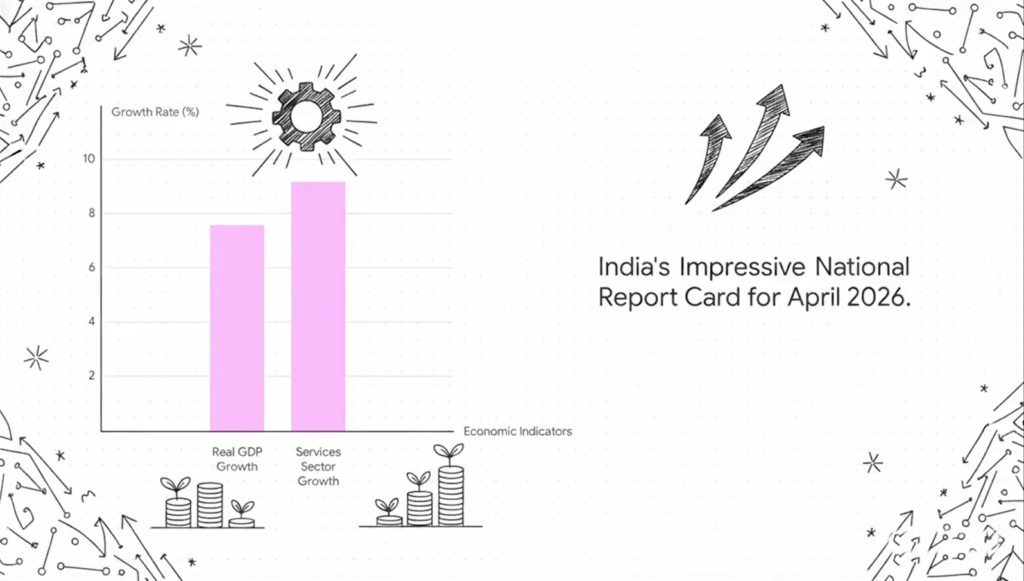
Women and Money: Gender Wealth Gap in India True financial independence is not merely about maintaining a standard savings account; it requires absolute agency over the invisible pipelines of asset titles, legal ownership, and long-term wealth compounding. Even as India’s 2026 GDP accelerates, a vast majority of women remain trapped on an economic treadmill due to structural asset ownership gaps and unindexed savings.  Before you default to a joint bank account or rely on informal family asset arrangements for your security, you need to ask a much harder question: “Do I possess the verified digital paperwork required to legally protect my asset ownership?” Establishing an independent financial identity requires navigating three critical gender-specific barriers: Leaving your name off property deeds and stock folios transforms you into a passive guest in your household’s financial vehicle rather than its active driver.  Watch this video to construct an independent financial shield and learn how to leverage sole accounts and international fund allocations to secure your lifecycle changes. 

ECONOMY

Inter-Generational Wealth Gap: Why Your Parents’ Finances Affect Yours

Inter-Generational Wealth Gap: Why Your Parents’ Finances Affect Yours Your financial starting line was drawn long ago by the strategic choices or hidden liabilities accumulated at your parents’ kitchen table. In the booming 2026 economic climate, traditional generational assets like physical gold or real estate create an invisible framework that heavily structures your current financial flexibility.  Before you map out your long-term wealth trajectory based on an expected family inheritance, you need to ask a much harder question: “Am I counting on a nominal windfall that is quietly losing its real purchasing power to inflation?” Navigating the inter-generational wealth bridge requires auditing your family’s financial history through three specific lenses: Relying blindly on legacy family wealth to secure your future milestones destroys your options, converting future safety nets into inflation-eroded financial mirages.  Watch this video to run a precise family balance sheet audit and learn how to align your family’s legacy capital with the fastest-spinning gears of the economy.

ECONOMY

Urban-Rural Divide: Which India Are You Living In?

Urban-Rural Divide: Which India Are You Living In? The broad national GDP and stock market headlines frequently paint a single uniform picture that completely masks a stark geographical fracture. The Indian economic landscape remains split into two distinct realities, operating on completely separate structural gears moving at vastly different speeds.  Before you project your multi-year financial goals using generalized national economic indices, you need to ask a much harder question: “Am I tailoring my asset strategy to the specific economic speed limits of my geography?” Bridging the geographical divide requires measuring three major divergent factors: Staying locked inside a slow-growth, traditional structural gear destroys your income trajectory, forcing you to accept an invisible pay cut despite your personal effort.  Watch this video to navigate the K-shaped geographical divide and learn how to align your career and capital with high-velocity sectoral tailwinds. 

ECONOMY

Insurance as Investment: A Losing Proposition

Insurance as Investment: A Losing Proposition Mixing life protection with wealth growth inside an opaque endowment plan or ULIP remains the single biggest financial clog in the middle-class pipeline. These black-box financial products anchor onto deep consumer emotions to deliver returns that fail to match the compounding velocity of the open market.  Before you pay your next heavy recurring insurance premium, you need to ask a much harder question: “Am I subsidizing the insurance company’s corporate growth at the direct expense of my retirement?” Unclogging your insurance pipeline requires evaluating three hidden financial blockages: Relying on investment-linked insurance leaves your family with inadequate life cover and traps your capital behind rigid, long-term exit penalties.  Watch this video to execute the ultimate “Separate to Win” strategy and discover how a pure term plan paired with direct index funds doubles your long-term wealth.

ECONOMY

Government Securities: Should Retail Investors Buy G-Secs?

Government Securities: Should Retail Investors Buy G-Secs? For retail savers exhausted by the strict five-lakh protection limit governing standard bank deposits, direct institutional access offers an elite alternative. The RBI Retail Direct portal opens a pipeline to the safest asset class in the entire country, completely backed by the absolute credit of the state. Before you route your emergency reserves or fixed capital into a standard commercial savings pool, you need to ask a much harder question: “Do I understand the inverse price-yield seesaw that impacts my risk-free assets?” Deploying a direct sovereign asset strategy requires analysing your portfolio’s boundaries: Treating absolute principal safety as a substitute for real purchasing power growth destroys options, locking your capital into an asset that can run in place against your personal inflation baseline.  Watch this video to master the mechanics of buying G-Secs directly and discover how to deploy them effectively alongside low-cost index funds.

Book an Appointment Form