
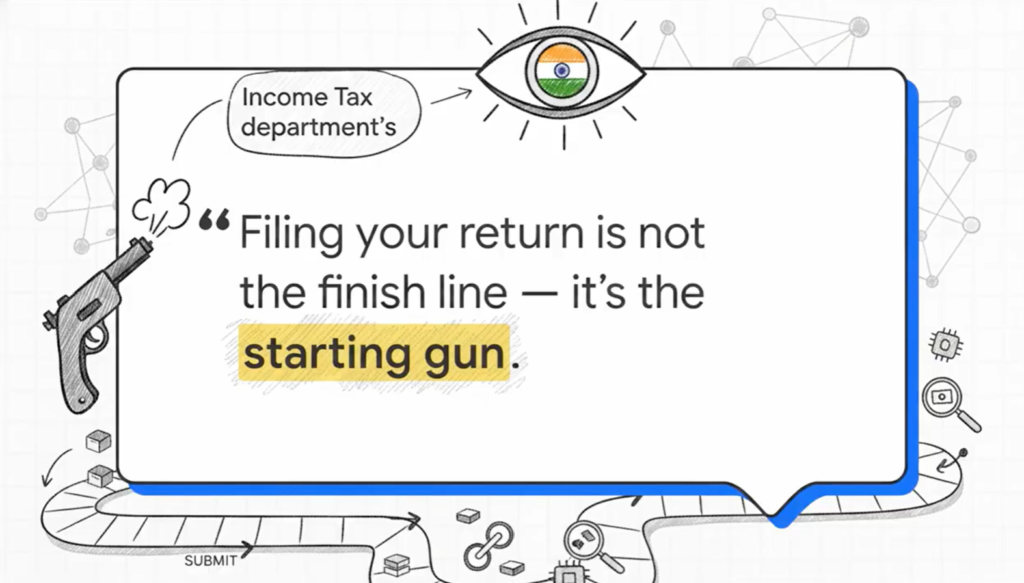
Monitoring & Compliance
Monitoring & Compliance: AIS, Notices, Advance Tax & Staying on the Right Side of the Line Filing your return is the start of the compliance cycle, not the end. This guide covers the data-driven tools you should check before filing — Form 26AS (tax credits), AIS (a comprehensive statement of income reported to the department from multiple sources), and TIS (a simplified summary) — along with the AIS “Feedback” mechanism for disputing incorrect entries. We cover advance tax obligations (instalments due 15% by June 15, 45% by Sept 15, 75% by Dec 15, 100% by March 15, with interest under Sections 234B/234C for shortfalls — and an exemption for senior citizens without business income), the common notices you might receive (143(1) intimation, 139(9) defective return, 142(1) inquiry, 148 reassessment) and how to respond, the shift to faceless assessment via the e-Proceedings portal, the penalty structure (234F late fee, 234A interest, 270A under/misreporting penalties up to 200%), and practical record-keeping guidance given ITR-U’s new 48-month correction window.