

Author name: Rakshith

ECONOMY

India’s Trade Agreements And What They Mean for Prices & Jobs

India’s Trade Agreements And What They Mean for Prices & Jobs International trade treaties are not just remote diplomatic handshakes; they operate as the ultimate balancing scales governing local consumer prices and job market survival. Operating in an interdependent landscape, Free Trade Agreements (FTAs) act as an accelerator for some sectors and a strict brake for others.  Before you assume global trade treaties only impact cross-border corporations, you need to ask a much harder question: “Is my current professional sector positioned on the accelerator or the brake of global trade agreements?” Navigating preferential trade networks requires monitoring three structural market adaptations: Failing to audit how free trade agreements alter market access traps your business in inverted duty structures and leaves your skill set obsolete.  Watch this video to map out India’s strategic trade alliances and discover how to align your career and capital with global export engines. 

ECONOMY

 Global Supply Chain Disruptions and Indian Prices

 Global Supply Chain Disruptions and Indian Prices In a highly integrated international production network, your local purchasing power remains tightly tethered to an intricate global conveyor belt. When a single corner of the map encounters a logistics snag, it levies a sudden, mandatory resilience tax on your lifestyle.  Before you execute a major discretionary tech or automotive purchase this quarter, you need to ask a much harder question: “Am I paying a highly inflated premium driven by a temporary systemic bottleneck?” Anticipating domestic price impacts requires identifying three powerful global supply bottlenecks: Chasing premium goods during unmanaged supply shocks wastes capital; you must insulate your portfolio by identifying domestic import substitution players with high pricing power.  Watch this video to analyse leading shipping indicators and learn exactly how to protect your purchasing power from global supply chain storms.

ECONOMY

Oil Prices: India’s Permanent Vulnerability

Oil Prices: India’s Permanent Vulnerability Crude oil functions as a heavy, mandatory global surcharge woven directly into every single beat of India’s domestic economic activity. Because we do not own the source of this energetic pulse, the nation remains structurally exposed to a critical external economic risk.  Before you construct a long-term financial layout assuming cheap energy access, you need to ask a much harder question: “How severely will a sudden energy shock in a distant shipping chokepoint compress my investment margins?” Insulating your lifetime savings from energy-driven shocks requires tracking three domino effects: Letting unhedged energy exposure sit in your portfolio leaves your retirement corpus highly vulnerable; macro shocks can quickly expand the fiscal deficit and erode your cash flow.  Watch this video to understand India’s energy lifeboats and discover how to employ global equities and currency buffers to permanently shield your wealth.

ECONOMY

China’s Economy And Why It Matters For India?

China’s Economy And Why It Matters For India? As global industrial supply chains undergo deep structural re-alignments, changes in foreign manufacturing engines shift the tectonic plates of worldwide capital. India finds itself navigating a complex, symbiotic, and competitive relationship, acting part beneficiary and part vulnerable spectator.  Before you react to geopolitical headlines tracking foreign economic distress, you need to ask a much harder question: “Am I positioned to profit from the massive global re-risking wave or am I vulnerable to industrial dumping?” Capitalizing on international industrial realignments requires monitoring three core macro trends: Viewing global markets through a purely localized lens leaves your portfolio exposed; you must differentiate between transient market shudders and massive long-term structural opportunities.  Watch this video to audit your investments for the China Plus One transition and discover how to capture the historic manufacturing boom. 

ECONOMY

Global Economic Interlinkages

Global Economic Interlinkages Most domestic investors focus exclusively on local market news feeds, completely ignoring the massive international gravitational forces acting on their portfolio. In reality, the health of your wealth is continuously steered by global pipelines stretching thousands of miles away.  Before you assume your Indian investments are completely insulated from international news, you need to ask a much harder question: “How directly does a single rate decision in Washington D.C. adjust the interest knob on my home loan?” Tracking international macro transmissions requires analysing three powerful financial conduits: Operating with an exclusively local investment focus destroys your purchasing power; global interlinkages mean a US economic slowdown directly hits your career alpha and salary growth.  Watch this video to trace the global-to-local transmission pipelines and discover how to build a robust international shield for your wealth. 

ECONOMY

Impact of SEBI Rule Changes

Impact of SEBI Rule Changes The domestic mutual fund landscape is undergoing a massive regulatory overhaul designed to clean up the clogged pipelines of outdated investment frameworks. Functioning as both a strict referee and an institutional plumber, SEBI is rolling out massive transparency mandates as industry assets soar past historic milestones.  Before you evaluate your mutual fund returns this quarter, you need to ask a much harder question: “Is my active fund manager genuinely eating their own cooking or just collecting high fees for closet indexing?” Navigating these sweeping mutual fund updates means tracking three critical compliance pillars: Failing to audit your fund’s updated BER and style consistency under these new mandates leaves your wealth vulnerable to unnecessary fee erosion.  Watch this video to decode the latest SEBI rules and learn how to utilize T+0 settlement and mandatory disclosures to clean up your portfolio. 

ECONOMY

Market Corrections and Crashes.docx

Market Corrections and Crashes.docx When the stock market climbs to record peaks and your portfolio shows spectacular double-digit returns, it is incredibly easy to become highly complacent. However, maintaining long-term financial security requires recognizing that the stock market operates as a sensitive telescope trading entirely on future expectations rather than a reflection of today’s GDP.  Before the next inevitable market downswing hits your dashboard, you need to ask a much harder question: “Am I holding a well-buffered, resilient wealth strategy or just a fragile portfolio inflated by temporary optimism?” Surviving the inevitable mood swings of the financial system requires mastering three distinct cyclical principles: Reacting to short-term news headlines destroys compounding power; maintaining a robust emergency fund ensures you view market downturns as a rare financial system sale.  Watch this video to master market cycles and discover how to build an earthquake-proof portfolio that thrives through inevitable corrections.

ECONOMY

Index Funds

Index Funds The investment advisory industry relentlessly pressures you to seek active, high-fee stock pickers to maximize your portfolio returns during an economic boom. However, the most effective move for a long-term retail portfolio isn’t uncovering the next superstar active fund manager—it is firing them and hiring the index instead.  Before you pay a premium fee for professional asset management, you need to ask a much harder question: “Am I paying an active premium just to receive a closet index fund that underperforms the market?” Deploying a passive tracking strategy helps your capital clear three major systemic hurdles: Buying into the illusion of manager intuition destroys your long-term alpha; minimizing fees through low-cost passive tracking guarantees higher real returns.  Watch this video to learn how to deploy the 80/20 rule using index funds to own the entire engine of India’s economy for almost free. 

ECONOMY

 IPO Mania: When to Participate and When to Stay Away

 IPO Mania: When to Participate and When to Stay Away An Initial Public Offering (IPO) is frequently perceived by retail investors as a guaranteed lottery ticket during a roaring primary market cycle. In reality, an IPO operates as a highly sophisticated marketing event where the corporation acts as the seller and you operate as the buyer. When the seller is in an immense hurry to close a transaction, the buyer must exercise double the caution.  Before you hit “Apply” on the latest heavily hyped primary offering, you need to ask a much harder question: “If the founders and early venture capitalists who know the company best are rushing to exit, why am I entering?” Evaluating an IPO past the glossy marketing material requires auditing four strict operational pillars: Failing to audit the true objects of an issue converts your hard-earned savings into a high-risk bet against optimistic corporate forward guidance.  Watch this video to look past the glossy prospectuses and learn exactly when an IPO becomes dangerous to your financial health. 

ECONOMY

FII Flows and Mutual Fund NAVs.docx

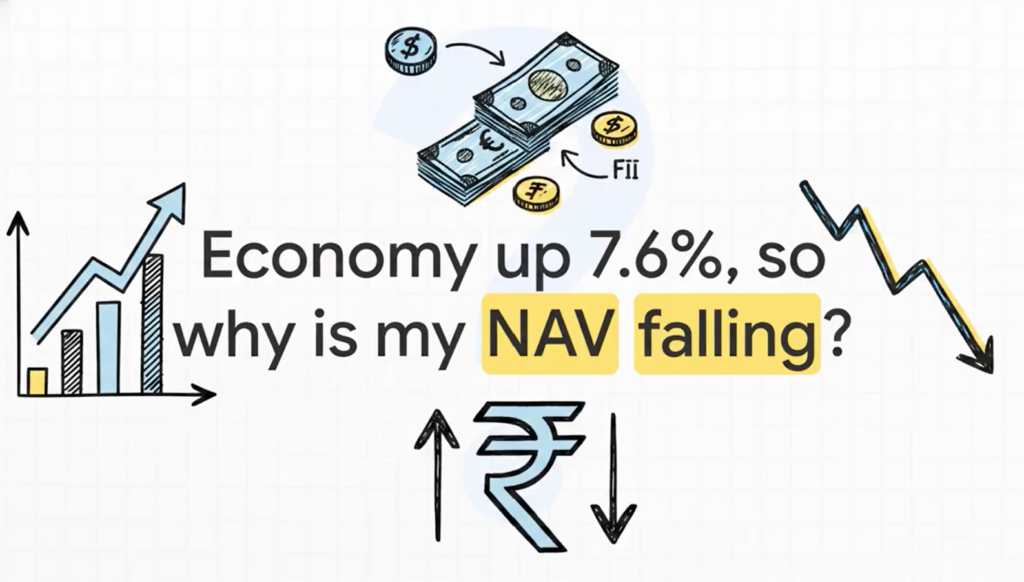
FII Flows and Mutual Fund NAVs.docx Retail investors frequently look at a sudden downswing in their local mutual fund portfolio and assume it reflects a severe decline in domestic corporate health and profitability. In reality, the day-to-day mood of the market is heavily dictated by massive foreign institutional investors acting as marginal price setters.  Before you panic-sell your equity units during a sudden market downswing, you need to ask a much harder question: “Is my portfolio dropping due to a loss in company value or global cash flows?” Sustaining long-term investment discipline requires analysing the global pipelines steering your asset values: Foreign flows represent the short-term market weather, but domestic corporate profits dictate long-term structural value; use FII-driven volatility to systematically accumulate units at a discount.  Watch this video to map out the hidden international pipes steering your mutual fund performance and learn how to insulate your portfolio from global policy shifts.

Book an Appointment Form