
Author name: Rakshith

ECONOMY

 New Ways to Participate in Real Estate

 New Ways to Participate in Real Estate Historically, participating in real estate was exactly like buying an entire orchard—demanding massive capital, high transaction friction, and completely locking up your financial mobility for decades. Modern financial innovation has completely rewritten the asset playbook, allowing you to bypass physical title deeds to subscribe to the harvest without owning the dirt.  Before you anchor your professional flexibility to a heavy 20-year mortgage, you need to ask a much harder question: “Am I buying genuine asset utility or locking my wealth into a low-yield bond?” Capturing the value of premium real estate while preserving liquid freedom means tracking three modern structural vehicles: True financial freedom in 2026 is driven by speed, access, and capital liquidity, not physical deeds.  Watch this video to explore alternative real estate vehicles and discover how to capture the juice of the 9.2% services economy with total mobility. 
ECONOMY

Affordable Housing Policy and Government Incentives

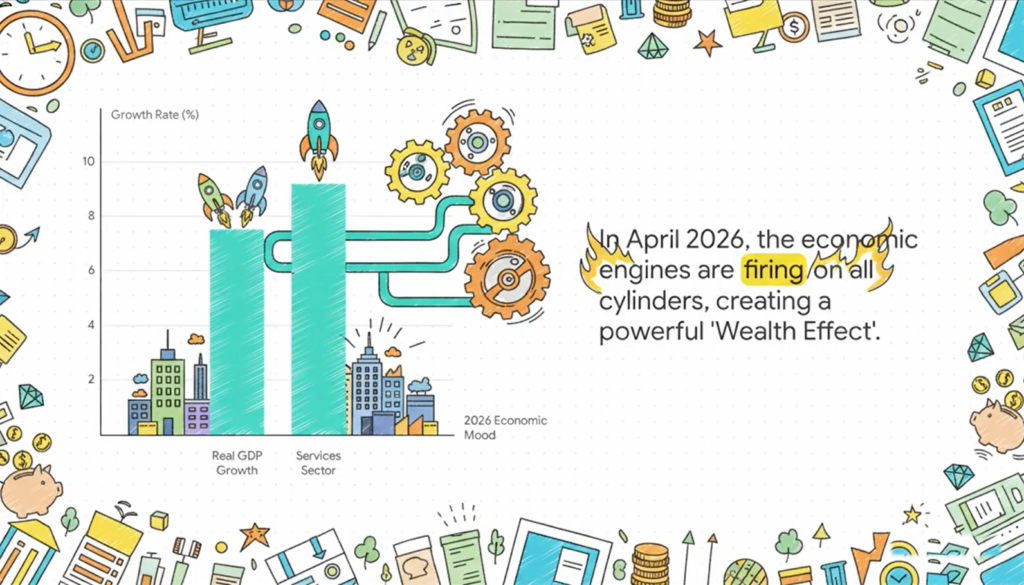
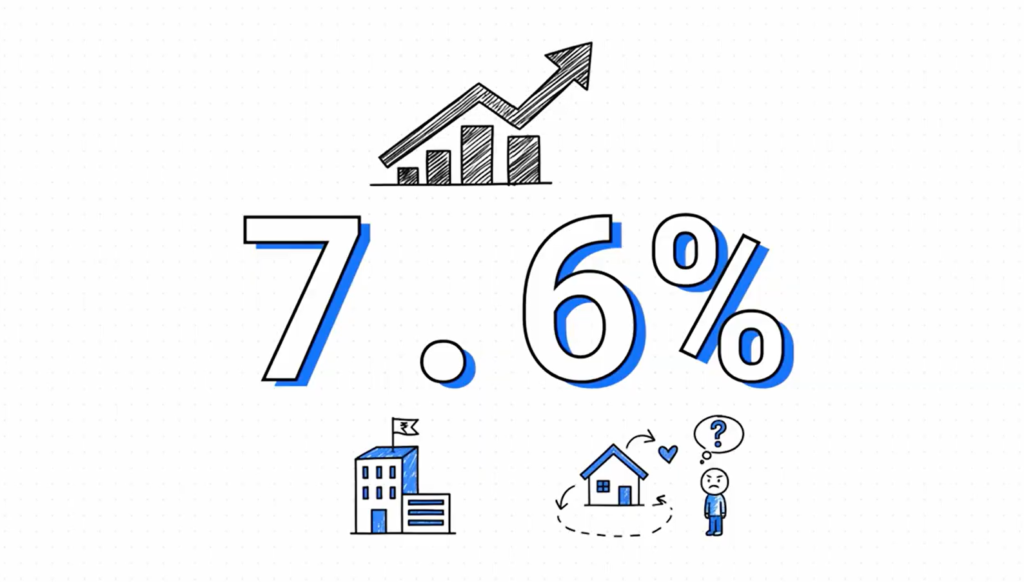
Affordable Housing Policy and Government Incentives As the premium urban housing market scales rapidly out of reach, the state has installed a vital network of structural handholds and safety belts to ensure first-time buyers aren’t left behind. In an economy accelerating at 7.6% real GDP growth, failing to strategically claim these PMAY-U 2.0 and tax concessions means climbing the property wall completely without a harness.  Before you absorb the unrestricted market cost of a long-term mortgage, you need to ask a much harder question: “Am I deploying every legal policy subvention to reduce my loan principal?” Maximizing your household cash flow against interest rate gravity requires locking in three state buffers: Clinging to a lack of structured paperwork means leaving substantial capital on the table; map your property search to government thresholds to slash your net cost of ownership by up to 20%.  Watch this video to navigate the PMAY Urban 2.0 application pipeline and learn how to maximize your cash flow with state incentives.

ECONOMY

The Hidden Tax on Property

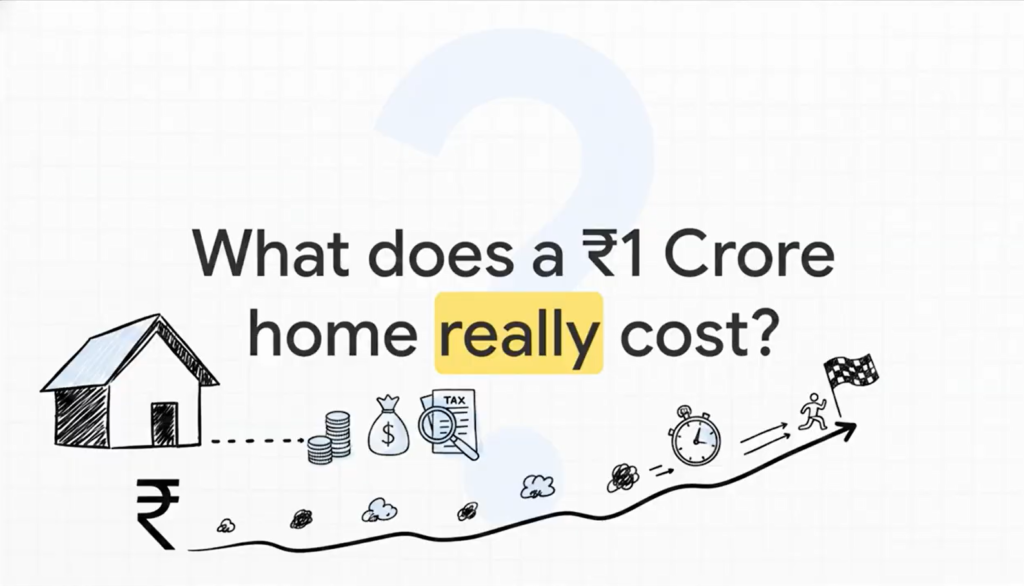
The Hidden Tax on Property The quoted sticker price of a home is a complete macroeconomic facade; a front-loaded, multi-layered transaction toll booth waits to swallow 8% to 12% of your investable capital before you ever receive the keys. Positioned in a high-growth market where record equity indices drive the top 10% into real estate, first-time buyers routinely overlook these heavy entry costs.  Before you deplete your liquid reserves to secure a premium layout, you need to ask a much harder question: “Have I fully budgeted for the front-loaded transactional friction threatening to break my cash flow?” Shielding your personal balance sheet from sudden, front-loaded depletion requires auditing three hidden gate taxes: Never allow the psychological wealth effect to trick you into over-leveraging your liquid assets; if you fail to estimate the 13.5% total transaction toll, your emergency fund will be the first casualty.  Watch this video to break down the complete hidden cost sheet of a property acquisition and learn how to protect your portfolio’s financial mobility. 

ECONOMY

RERA: A Game Changer for Homebuyers

RERA: A Game Changer for Homebuyers Buying an under-construction property in the historical era was exactly like boarding a long-haul flight with a promoter who had no clear flight manual, could redirect your destination mid-air, and might easily default on construction fuel. The implementation of RERA fundamentally restructured the real estate industry by installing a rigid air traffic control tower and an ironclad project black box.  Before you commit your hard-earned savings to a new property deed, you need to ask a much harder question: “Am I actively auditing my developer’s quarterly progress reports or flying entirely blind?” Protecting your career capital across a multi-year residential timeline means leveraging three strict statutory mandates: A RERA registration number guarantees regulatory transparency, but it cannot print emergency funding for an unorganized developer caught in a severe alternative lender liquidity squeeze.  Watch this video to master the digital RERA portal, analyse project progress reports like an auditor, and insulate your wealth from real estate turbulence.

ECONOMY

Property Price Movements

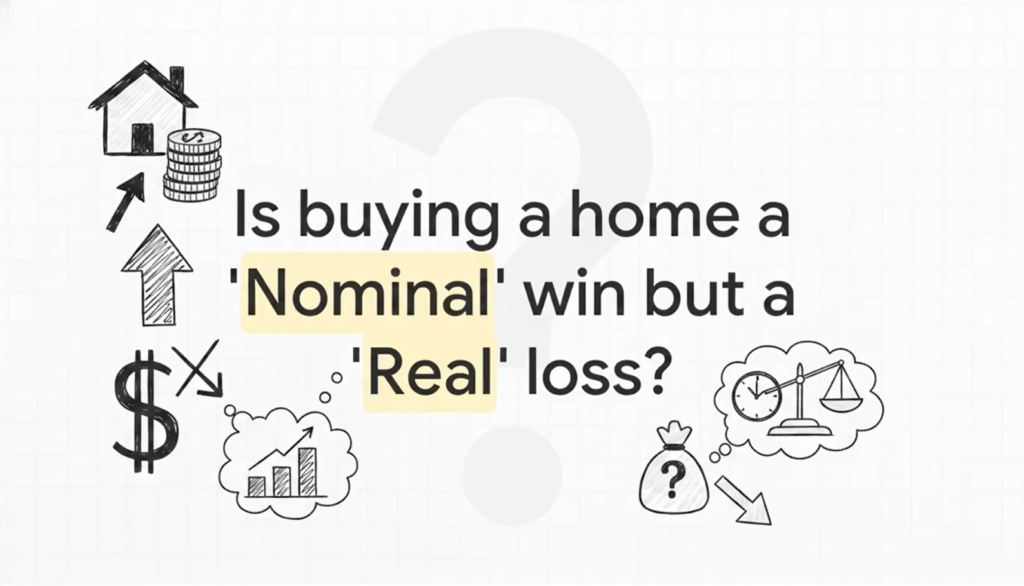
Property Price Movements A physical house is never an isolated, static block of wealth; it operates as a massive ship continuously tossed and steered by deep, global macroeconomic currents. In a 2026 climate where real GDP climbs at 7.6% and services grow at 9.2%, real estate is widely marketed as the ultimate wealth-tier asset.  Before you yield to a property broker’s aggressive sales pitch, you need to ask a much harder question: “Are deep financial liquidity currents actively inflating my property value or dragging my net worth under?” Making an efficient real estate decision requires looking past short-term optimism to track three foundational price drivers: Never permit your physical assets to swallow your long-term financial mobility; if your property’s net appreciation fails to clear your personal inflation baseline, you are receiving a real pay cut in your net worth.  Watch this video to analyse the complex interaction of interest rates, developer liquidity, and foreign capital flows shaping property price movements. 

ECONOMY

UPI, Digital Payments, and the Invisible Economy

UPI, Digital Payments, and the Invisible Economy India’s digital payment architecture is processing over 15 billion transactions a month, rapidly evolving from a standard smartphone convenience into the absolute primary financial ledger of the nation. While real GDP scales at 7.6% and the services sector accelerates at 9.2%, UPI is systematically converting the historically unorganized cash economy into a high-velocity, completely visible data stream.  Before you effortlessly complete your next instant scan-to-pay transaction, you need to ask a much harder question: “Is this frictionless digital freedom quietly baiting me into a lifestyle lock-in?” Navigating India’s high-tech digital ecosystem requires managing three powerful structural transformations: An expandingly green digital portfolio means absolutely nothing if your smartphone convenience is quietly eroding your future purchasing power through unmonitored lifestyle creep.  Watch this video to understand the invisible nervous system of the digital economy and learn exactly how to introduce strategic financial friction to keep your cash flow locked into real wealth creation.

ECONOMY

Choose Your Bank Wisely

Choose Your Bank Wisely Selecting a banking partner in India’s modern economy functions exactly like choosing a vehicle from a high-velocity fleet, where your specific destination and financial cargo dictate whether you need an armoured truck, a premium SUV, or a high-speed motorbike. Positioned in 2026’s goldilocks environment of 7.6% real GDP growth and a roaring 9.2% services sector expansion, your choice of a bank account is no longer a passive administrative choice—it is a live investment strategy.  Before you select a generic parking spot for your next monthly salary transfer, you need to ask a much harder question: “Am I leaving my capital in a slow vehicle while the rest of the economy moves at the speed of light?” Aligning your lifestyle needs with institutional realities means tracking three distinct banking models: Stop letting the money illusion lull you into financial stagnation; a single, unmanaged savings account is a risky bet against your own purchasing power.  Watch this video to map out your personal banking profile and learn how to split your liquid assets strategically across separate legal lifeboats to ensure maximum speed and safety.

ECONOMY

Bad Loans @ Banks and Your FD Rates

Bad Loans @ Banks and Your FD Rates To understand the structural plumbing of the banking system, imagine a massive commercial kitchen where your cash deposits are the wholesale raw ingredients and loans are the finished dishes sold to corporate diners. A Non-Performing Asset (NPA) is simply a diner who walks out without paying for a lavish meal, leaving a massive hole in the kitchen’s budget that everyday savers eventually fund. While India’s 2026 economy cruises at a strong 7.6% real GDP growth and gross bank defaults sit at decade-lows, the institutional memory of past banking crises continues to dictate your financial returns.  Before you lock your hard-earned capital into a traditional fixed deposit, you need to ask a much harder question: “Is my bank spending its operational energy chasing unpaid meals instead of feeding my retirement?” Tracking how non-performing corporate loans directly penalize your personal wealth means monitoring three institutional levers: Don’t let institutional bad debt function as a hidden tax on your personal net worth; a fixed deposit should only play a minor support role for baseline stability rather than acting as the lead actor of your wealth strategy.  Watch this video to understand the real structural health of your financial institution and discover how to bypass bad loans to capture the true growth of the nation. 

ECONOMY

Bank Failures and DICGC Coverage

Bank Failures and DICGC Coverage Most consumers view a standard commercial bank as an indestructible vault engineered to safeguard their lifetime savings forever. In reality, a banking institution operates like a ship on a volatile sea—and when severe asset irregularities trigger a crisis, you need to verify the exact capacity of your lifeboat. Before you park your entire liquid net worth inside a single high-yielding account, you need to ask a much harder question: “Is my capital structured safely within institutional weight limits?”  Securing your core savings from structural failure requires mastering the exact parameters of the deposit insurance safety net: Chasing attractive interest yields at unstable institutions without proper diversification exposes your principal to extreme structural risk; safety of purchasing power demands strict navigation.  Watch this video to perform an institutional wealth audit and learn how to partition your deposits across separate legal lifeboats to guarantee 100% protection.

ECONOMY

Bank Mergers and What They Mean for Your Account?

Bank Mergers and What They Mean for Your Account? The sweeping consolidation of public sector banks down into just 12 massive financial institutions represents a structural rewiring of the nation’s financial circulatory system. When a smaller bank is absorbed by an anchor institution, it is far more than a simple cosmetic logo update on your digital dashboard. Before you assume your automated banking transactions will continue uninterrupted, you need to ask a much harder question: “Have I verified the digital coordinates that link my portfolio to the clearing house?”  Navigating an institutional banking migration requires auditing the core digital and contractual plumbing: A major core banking system integration can trigger temporary digital clogs; failing to audit your mandates risks a real financial penalty if an automated payment bounces.  Watch this video to execute a seamless account migration audit and discover how to leverage bank consolidation to negotiate superior credit terms. 

Book an Appointment Form